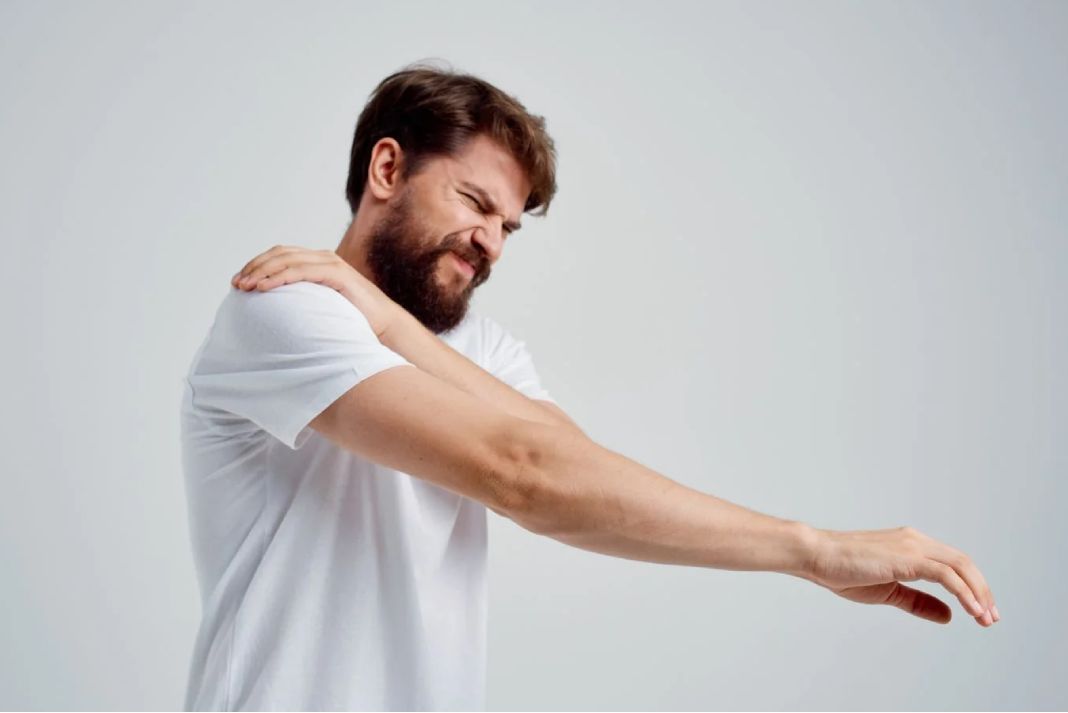

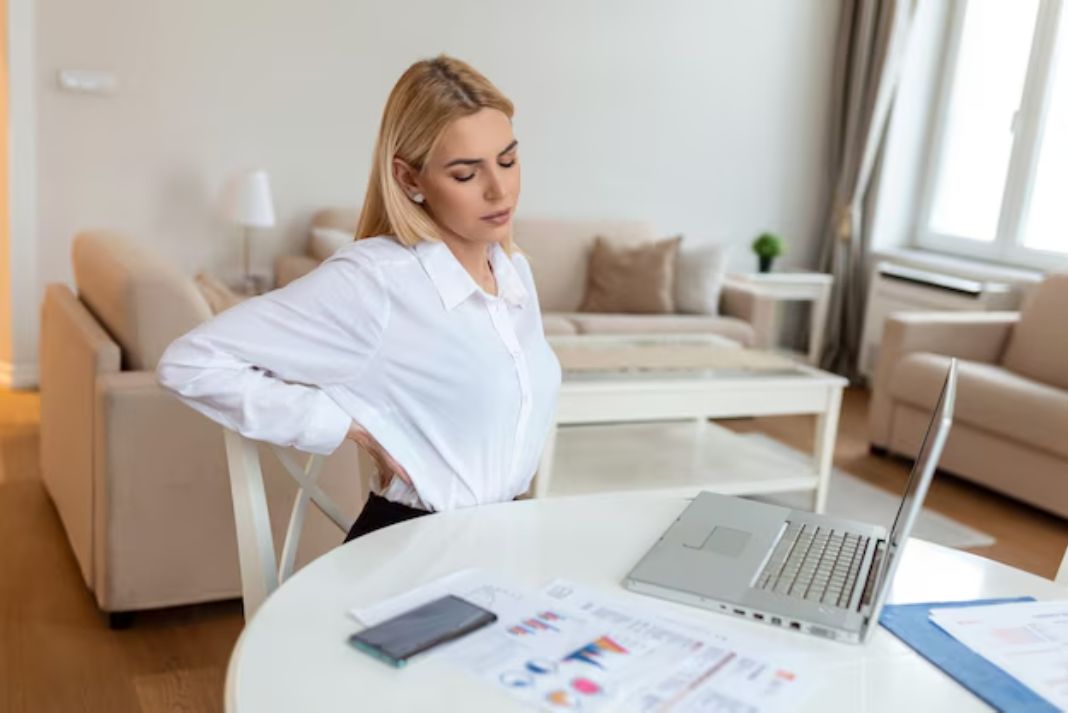
Sick of ending your workday with a tight neck, sleepy brain, and cranky lower back?
You’re not alone. Prolonged sitting + laptop posture = muscle overload, poorer circulation, and fatigue. The good news: posture is highly modifiable. With the right desk habits you can feel lighter, more energetic, and in less pain — without quitting your job 😄
🧠 Why Posture Affects Energy (Not Just Pain)
🪑 Sitting too long → static load on neck, back, hip flexors → muscles get tired → your brain feels tired too.
🫀 Less movement → poorer circulation → lower oxygen delivery → “afternoon slump.”
🧱 Forward head & rounded shoulders → neck extensors work harder → soreness + headaches.
🧬 Studies on office workers show high rates of neck, shoulder, and low-back pain when sitting >6 hrs/day.
So improving posture = better load distribution + more blood flow + more movement = more energy + less pain.
🏆 What You’ll Get in This Guide
✅ 20 science-backed posture remedies
✅ Mechanism (why it works)
✅ Step-by-step instructions
✅ Risks/when to be careful
✅ Expert voices + sources (PubMed / respected health sites)
✅ A ready-to-use desk routine
✅ FAQ for SEO 🟢
✅ Tables for skimmers
Let’s go. 💪
🧾 Quick-Glance Table
| # | Remedy 🛠️ | Best For |
|---|---|---|
| 1 | Sit–stand alternation | All-day sitters, energy slump |
| 2 | Ergonomic chair + neutral sitting | Baseline posture |
| 3 | Micro-breaks every 20–30 min | Static load + focus |
| 4 | Forward-head correction | Neck/shoulder pain |
| 5 | Lumbar extension breaks | Low-back ache |
| 6 | Hip-flexor stretch | Desk-tight hips |
| 7 | Thoracic opener | Rounded shoulders |
| 8 | Core + glute activation | Long-term support |
| 9 | Scapular strengthening | Slumped posture |
| 10 | Monitor/keyboard setup | Preventing FHP |
| 11 | Foot/leg positioning | Pelvic balance |
| 12 | Ankle pumps | Circulation/energy |
| 13 | Neck/UT micro-stretch | Quick tension relief |
| 14 | Foam-roll / chair edge | Upper-back mobility |
| 15 | Hip mobility / chair squats | Stiff lower body |
| 16 | Breathing + posture reset | Oxygen + calm |
| 17 | Screen/visual breaks | Eye + neck strain |
| 18 | Standing micro-moves | Standing-desk fatigue |
| 19 | Evening posture reset | Next-day freshness |
| 20 | Posture habit training | Keeping it all going |
🧪 The 20 Remedies (Pretty, but still nerdy)
I’ll keep them punchy, but each still has: 🧬 Mechanism → 🧭 How to do it → ⚠️ Risks → 🆚 Compare.
1️⃣ Sit–Stand Alternation 🪜
🧬 Mechanism: Switching from sitting to standing changes muscle groups, improves circulation, and reduces neck/shoulder load — studies on standing desks show better craniovertebral angle and less fatigue.
🧭 Do it:
Sit 45–60 min
Stand 10–20 min
While standing, keep screen at eye level + knees soft
Repeat all day
⚠️ Risks: Don’t stand all day right away — you can get foot/knee/back fatigue.
🆚 vs staying seated: Alternating wins. Standing all day ≠ better (Harvard backs this).
Source: Harvard Health on standing desks (Harvard.edu), Lee & Lee 2024 on posture with standing desks.
2️⃣ Ergonomic Chair + Neutral Sitting 🪑
🧬 Mechanism: Supporting lumbar curve + elbows + screen at eye-level = less spinal shear → less fatigue.
🧭 Do it: Feet flat 👉 hips slightly above knees 👉 bum back to the backrest 👉 lumbar supported (use towel if needed) 👉 elbows 90° 👉 monitor dead ahead.
⚠️ Risks: Even perfect sitting is bad if it’s only sitting.
🆚 vs expensive chairs: Setup > price. A mid-range chair + good setup beats a fancy chair + bad posture.
3️⃣ Micro-Breaks ⏱️
🧬 Mechanism: Static load → fatigue; tiny breaks → tissue reperfusion → less discomfort.
🧭 Do it: Every 20–30 min: stand 60–90 sec, stretch arms overhead, roll shoulders, 3 deep breaths.
⚠️ Risks: Only that you might ignore the timer 😂
🆚 vs 1 big break: Many small breaks usually outperform one big break for comfort.
Source: Sitting discomfort + postural shifting study.
4️⃣ Forward-Head Correction 🙆
🧬 Mechanism: FHP increases neck-extensor demand → pain; chin-tuck restores head over shoulders.
🧭 Do it:
Sit tall
Gently pull chin back (not down) for 5–10 s
Add shoulder-blade squeeze 10×
Repeat every 1–2 hrs
⚠️ Risks: Cervical issues → get physio guidance.
🆚 vs neck massage: Massage feels good, but posture change treats the cause.
Source: FHP reduces neck-extensor endurance, BMC Musculoskeletal Disorders 2025.
5️⃣ Lumbar Extension / Back-Arch Breaks 🐈⬛
🧬 Mechanism: Sitting = lumbar flexion → disc pressure ↑; extension intermittently = pressure ↓
🧭 Do it: Stand, hands on hips, gently arch back 10–15 s, repeat ×3, 2–3×/day.
⚠️ Risks: Disc issues/spondylolisthesis → go gentle.
🆚 vs staying upright only: This directly unloads the back.
6️⃣ Hip-Flexor Stretch 🦵
🧬 Mechanism: Tight hip flexors pull pelvis → low-back strain → “desk back.” Stretch = better alignment.
🧭 Do it: Half lunge, tuck pelvis, feel stretch in front of hip, hold 30 s each side, 2–3 rounds/day.
⚠️ Risks: Knee/hip problems → use cushion or stand-up variation.
🆚 vs hamstring stretch: For desk back, hip-flexor stretch often gives more relief.
7️⃣ Thoracic Extension & Chest Opener 🦅
🧬 Mechanism: Rounded desk posture ↓ thoracic mobility → neck/shoulder compensate → pain + shallow breathing.
🧭 Do it: Lean over chair back or foam roller at mid-back, arms overhead, 20–30 s, 2×/day.
⚠️ Risks: Osteoporosis → gentle only.
🆚 vs only scapular work: Mobility + strength together beats either alone.
8️⃣ Core & Glute Activation 🧱
🧬 Mechanism: Strong trunk + glutes = stable pelvis = spine happier while sitting/standing.
🧭 Do it:
10–15 glute bridges
20–30 s plank
1–2×/day (lunch + evening)
⚠️ Risks: Keep neutral spine; no jerky bridges.
🆚 vs stretches: Strength is what keeps posture.
9️⃣ Scapular Strengthening 🎯
🧬 Mechanism: Weak rhomboids/lower traps → shoulders round → head pokes fwd.
🧭 Do it: Band rows 12–15 reps, wall Y/T 10 reps, 3–4×/week.
⚠️ Risks: Shoulder injury → shorten range.
🆚 vs posture brace: Muscles > brace long term.
🔟 Monitor & Keyboard Setup 🖥️
🧬 Mechanism: Low screen = neck flexion = FHP = pain. Neutral screen → neutral neck.
🧭 Do it:
Top of screen = eye level
Screen 50–70 cm away
Keyboard at elbow height
⚠️ Risks: If desk too high, you’ll hike shoulders → use keyboard tray.
🆚 vs all other hacks: If this is wrong, everything else is fighting uphill.
Source: Office ergonomics and neck pain, Physio-pedia.
1️⃣1️⃣ Foot Support & Leg Positioning 🦶
🧬 Mechanism: Dangling/crossed legs → pelvic tilt → spine misaligns.
🧭 Do it: Feet flat or footrest, thighs parallel, don’t cross for hours.
⚠️ Risks: None, just habit.
🆚 vs backrest tweaks: Sometimes fixing feet magically fixes back.
1️⃣2️⃣ Ankle Pumps / Calf Moves 🦵💧
🧬 Mechanism: Calf pump = blood back to heart = more alertness, less swelling.
🧭 Do it: 30 s heel–toe pumps every 30 min, or 20 calf raises when standing.
⚠️ Risks: DVT history → ask doctor.
🆚 vs staying still: This wins for circulation.
1️⃣3️⃣ Neck & Upper-Trap Micro-Stretch 💆
🧬 Mechanism: Desk work over-recruits upper traps/levator scap → tension → headaches.
🧭 Do it: Ear to shoulder 20 s → turn head 20 s → 10 shoulder rolls. Hourly.
⚠️ Risks: Don’t yank neck.
🆚 vs massage ball: Faster + can do in meetings.
1️⃣4️⃣ Mid-Back Foam-Roll / Chair Edge 🧊
🧬 Mechanism: Thoracic stiffness = compensations below/above.
🧭 Do it: 2–3 gentle extensions over roller, 20–30 s, mid-afternoon.
⚠️ Risks: Osteoporosis → skip roller.
🆚 vs chest stretch only: Roller gives spine mobility, not just muscle length.
1️⃣5️⃣ Hip-Mobility / Chair Squats 🏋️
🧬 Mechanism: Hips stuck at 90° → stiffness → back works extra.
🧭 Do it: 10 chair squats every 2–3 hrs or seated hip circles 5× each way.
⚠️ Risks: Knee pain → do partial or hip circles only.
🆚 vs walking only: This targets hips directly.
1️⃣6️⃣ Breathing + Posture Reset 🌬️
🧬 Mechanism: Slouching = shallow breathing = low energy; diaphragm breathing opens thorax.
🧭 Do it: Sit tall → 5 slow belly breaths → on exhale, roll shoulders back → repeat 2–3×/day.
⚠️ Risks: None for healthy people.
🆚 vs stretch: This calms and aligns.
1️⃣7️⃣ Screen / Visual Breaks 👀
🧬 Mechanism: Looking down → FHP; eye strain → fatigue.
🧭 Do it: 20-20-20 rule: every 20 min, look 20 ft away for 20 s. Add chin-tuck.
⚠️ Risks: Just don’t turn it into 20 min of social media 😅
🆚 vs posture only: This protects eyes and neck.
1️⃣8️⃣ Standing Micro-Moves 🪩
🧬 Mechanism: Standing still is still “static.” Micro-moves keep circulation going.
🧭 Do it: Weight shift L↔R, heel raises, tiny knee bends while at standing desk.
⚠️ Risks: Don’t lock knees.
🆚 vs static standing: This feels better by 3 pm.
1️⃣9️⃣ Evening Posture Reset 🌙
🧬 Mechanism: Daytime load accumulates → unload → sleep better → better posture next day.
🧭 Do it (5 min):
Child’s pose 1 min
Cat–cow 1–2 min
Legs-up-wall 2 min
⚠️ Risks: Knee/hip → use cushions.
🆚 vs doing nothing: You start next day from neutral, not from “tight.”
2️⃣0️⃣ Posture Awareness & Habit Training 🧠
🧬 Mechanism: Behavioural cueing = you actually do the above 19.
🧭 Do it: Sticky note “Posture?”, phone alarm every 2 hrs, weekly self-check.
⚠️ Risks: Don’t make it guilt-based.
🆚 vs one-time setup: Habits = long-term results.
🗓️ Desk-Worker Routine (8-Hour Day)
08:45 — Set up desk (monitor, chair), 5 belly breaths 🌬️
Every 25–30 min — Micro-break: stand, stretch, ankle pumps, 20-20-20 👀
Every 60 min — Switch sit → stand (10–20 min) 🪜
10:30 — Hip-flexor stretch + chest opener 🦵🦅
Lunch — 10–15 glute bridges + 30 s plank 💪
15:30 — Foam-roll / thoracic opener + posture check 🧊
End of day — 5 min posture unload 🌙
🗣️ Expert Voices (Authoritativeness) 📚
“When the arms aren’t supported … it provides an excess load on the neck and scapula stabilisers leading to muscle fatigue.” — Office Ergonomics and Neck Pain, Physio-pedia.
“Postural changes using a standing desk can positively impact posture and reduce muscle fatigue.” — Lee & Lee, Healthcare 2024.
“Ergonomic interventions significantly decrease pain in different anatomical regions among office workers.” — Santos et al., J Clin Med 2025.
These support the core claim: posture + movement + ergonomics = less pain + better energy.
❓ SEO-Friendly FAQ
1. How long until I feel better?
👉 Many people feel lighter day 1–3 just from monitor height + micro-breaks. Structural changes (neck endurance, scapular strength) = 4–12 weeks.
2. Is a standing desk mandatory?
👉 Nope. It’s just an easy way to add movement. You can get 70–80 % of the benefit from micro-breaks + stretches + good chair.
3. Are posture gadgets/braces worth it?
👉 Only as a short-term reminder. Long-term, strength (Remedies 8–9) and awareness (Remedy 20) win.
4. Can posture help headaches?
👉 Yes, if headaches are partly from neck/upper-trap tension or FHP. Try Remedies 4, 7, 13 first.
5. I work from a laptop — what now?
👉 Use a laptop stand + external keyboard/mouse = instant neck relief 🙌
6. Do I still need to exercise?
👉 Yup. Posture habits ≠ full-body fitness. But they make your workouts safer and reduce the “I’m too sore to train” excuse.
7. What if I already have low-back pain?
👉 Start with gentle versions (Remedies 2, 3, 5, 6, 16) and get a physio to rule out red flags.
🔐 Disclaimer: Educational only, not a substitute for medical/physio advice. Get cleared if you have existing spine/nerve issues.