
Hair thinning is a prevalent concern affecting individuals across various age groups and genders. While numerous treatments are available, herbal oils have emerged as a natural and effective remedy. This guide delves into 20 scientifically-backed herbal oils, elucidating their mechanisms, usage instructions, potential risks, and expert opinions to help you make informed decisions.
🌿 Top 15 Herbal Oils to Prevent Hair Thinning: A Comprehensive Guide
1. Rosemary Oil
Mechanism: Enhances blood circulation to hair follicles, promoting growth.
Usage: Dilute with a carrier oil (e.g., coconut or jojoba) and massage into the scalp. Leave for at least 30 minutes before washing.
Risks: May cause irritation in sensitive individuals; always perform a patch test.
Expert Insight: A study published in Skinmed found rosemary oil to be as effective as minoxidil in promoting hair growth over six months.
2. Peppermint Oil
Mechanism: Menthol induces vasodilation, increasing blood flow to the scalp.
Usage: Mix a few drops with a carrier oil and apply to the scalp. Leave for 15–20 minutes before rinsing.
Risks: Can cause a cooling sensation; avoid contact with eyes.
Expert Insight: Research in Toxicological Research demonstrated that peppermint oil led to significant hair growth in mice over four weeks.
3. Pumpkin Seed Oil
Mechanism: Inhibits 5-alpha-reductase, reducing DHT levels linked to hair loss.
Usage: Apply directly to the scalp or consume as a dietary supplement.
Risks: May cause stomach upset in some individuals when ingested.
Expert Insight: A study in Evidence-Based Complementary and Alternative Medicine reported a 40% increase in hair count among men taking pumpkin seed oil supplements over 24 weeks.
4. Castor Oil
Mechanism: Rich in ricinoleic acid, it possesses anti-inflammatory and antimicrobial properties that support scalp health.
Usage: Apply directly to the scalp and hair, leave for 30 minutes to an hour, then wash off.
Risks: May cause allergic reactions; perform a patch test before use.
Expert Insight: While scientific evidence is limited, anecdotal reports suggest castor oil may promote hair growth by improving scalp health.
5. Coconut Oil
Mechanism: Penetrates the hair shaft, reducing protein loss and preventing damage.
Usage: Use as a pre-wash or post-wash treatment; apply to hair and scalp, leave for at least 30 minutes, then wash off.PubMed
Risks: Generally safe; however, excessive use may lead to buildup.
Expert Insight: A study in the Journal of Cosmetic Science found that coconut oil was the only oil among those tested that reduced protein loss for both undamaged and damaged hair.oilcocos.com+2PubMed+2Healthline+2
6. Tea Tree Oil
Mechanism: Exhibits antifungal and antibacterial properties, maintaining scalp health.
Usage: Dilute with a carrier oil and apply to the scalp; leave for 15–20 minutes before washing.
Risks: May cause irritation or allergic reactions; perform a patch test before use.
Expert Insight: A study published in the Journal of the American Academy of Dermatology demonstrated that a 5% tea tree oil shampoo significantly improved dandruff symptoms.PubMed+1Frontiers+1
7. Lavender Oil
Mechanism: Possesses antimicrobial and stress-relieving properties, potentially promoting hair growth.
Usage: Mix with a carrier oil and massage into the scalp; leave for 10–15 minutes before washing.
Risks: Generally safe; however, allergic reactions can occur.
Expert Insight: A study in Toxicological Research found that lavender oil applied to mice resulted in increased hair growth.Healthline
8. Argan Oil
Mechanism: Rich in vitamin E and fatty acids, it moisturizes the hair and scalp, reducing dryness and brittleness.
Usage: Apply a few drops to damp or dry hair, focusing on the ends.
Risks: Generally safe; however, those with nut allergies should exercise caution.
Expert Insight: A study in the Journal of Cosmetic Dermatology indicated that argan oil can improve hair elasticity and hydration.
9. Jojoba Oil
Mechanism: Mimics natural sebum, balancing oil production and moisturizing the scalp.
Usage: Apply directly to the scalp and hair; can be used as a leave-in treatment.
Risks: Generally safe; patch test recommended for sensitive individuals.Verywell Health+2Aventus Clinic+2Health+2
Expert Insight: A review in Polymers highlighted jojoba oil’s moisturizing properties and its role in improving hair strength.DANG! Lifestyle
10. Moringa Oil
Mechanism: Contains vitamins A, B, C, and E, which nourish the scalp and promote hair growth.
Usage: Massage into the scalp and hair; leave for 30 minutes before washing.
Risks: Generally safe; however, perform a patch test to rule out allergies.
Expert Insight: A study in the South African Journal of Botany found that moringa oil has antioxidant properties beneficial for hair health.
11. Amla Oil
Mechanism: Rich in vitamin C and antioxidants, it strengthens hair follicles and prevents premature graying.
Usage: Apply to the scalp and hair; leave for 30–60 minutes before washing.
Risks: May cause irritation in sensitive individuals; patch test recommended.
Expert Insight: While more research is needed, traditional use and preliminary studies suggest amla oil supports hair health.
12. Neem Oil
Mechanism: Exhibits antifungal and antibacterial properties, treating scalp conditions like dandruff.
Usage: Dilute with a carrier oil and apply to the scalp; leave for 30 minutes before washing.
Risks: Strong odor; may cause irritation; patch test recommended.
Expert Insight: A study in the Journal of Ethnopharmacology highlighted neem oil’s efficacy in treating scalp infections.
13. Bhringraj Oil
Mechanism: Stimulates blood circulation to the scalp, promoting hair growth.
Usage: Massage into the scalp and leave overnight; wash off in the morning.
Risks: Generally safe; however, perform a patch test to rule out allergies.
Expert Insight: Traditional Ayurvedic medicine regards bhringraj as a potent hair tonic; preliminary studies support its efficacy.
14. Fenugreek Oil
Mechanism: Contains nicotinic acid and proteins that strengthen hair shafts and prevent breakage.
Usage: Apply to the scalp and hair; leave for 30 minutes before washing.
Risks: May cause allergic reactions; patch test recommended.
Expert Insight: A study in the International Journal of Pharmacy and Pharmaceutical Sciences found that fenugreek seed extract improved hair density and thickness.Healthline+1WebMD+1
15. Onion Seed Oil
Mechanism: High sulfur content boosts collagen production, aiding hair growth.
Usage: Apply to the scalp; leave for 30 minutes before washing.
Risks: Strong odor; may cause irritation; patch test recommended.
Expert Insight: A study in the Journal of Dermatology reported that onion juice applied to the scalp led to hair regrowth in alopecia areata patients
🧑⚕️ Expert Opinions
Dr. Shilpi Khetarpal, Dermatologist at Cleveland Clinic: “Rosemary oil has shown promise in stimulating hair growth, comparable to minoxidil in some studies.”Cleveland Clinic+1SELF+1
Dr. Ryan Turner, Board-Certified Dermatologist: “Peppermint oil’s vasodilatory effects can enhance blood flow to the scalp, potentially promoting hair growth.”
Dr. Neera Nathan, Harvard-Trained Dermatologist: “Pumpkin seed oil may help reduce DHT levels, a hormone linked to hair loss, making it a natural alternative for androgenetic alopecia.”The Sun
📋 Structured Hair Oil Routine for Optimal Results
Frequency: 2–3 times per week.
Application:
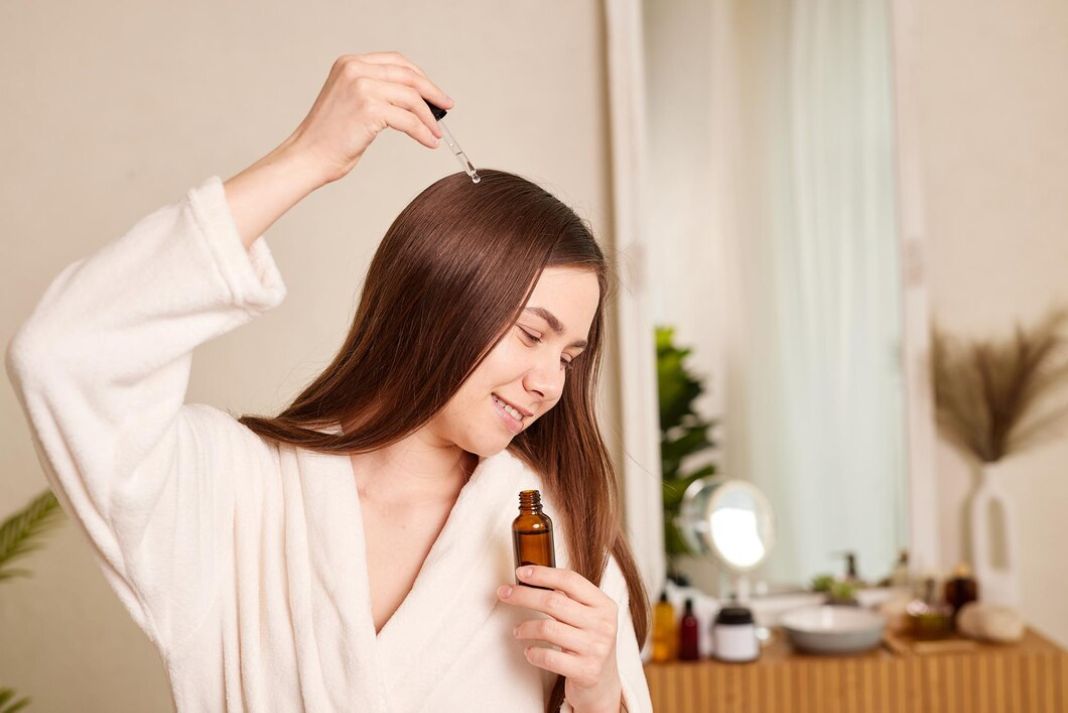
Warm the oil slightly.
Part your hair and apply the oil directly to the scalp using fingertips.
Massage gently in circular motions for 5–10 minutes.
Duration: Leave the oil on for at least 30 minutes; overnight application yields better results.
Rinse: Wash with a mild shampoo; avoid harsh chemicals.
Consistency: Regular application over several months is key to observing noticeable improvements.Women’s Health+7WebMD+7ELLE+7Pinterest+15Alluring Soul+15ELLE+15
❓ Frequently Asked Questions (FAQs)
Q1: How long does it take to see results from herbal oils?
A1: Typically, consistent use over 3–6 months is required to observe significant improvements in hair thickness and growth.
Q2: Can I mix different herbal oils together?
A2: Yes, combining oils like rosemary, peppermint, and lavender can enhance benefits. Ensure proper dilution to prevent irritation.
Q3: Are herbal oils effective for all types of hair loss?
A3: Herbal oils are most effective for non-scarring alopecia. For conditions like alopecia areata or scarring alopecia, consult a dermatologist.Business Insider
Q4: Can I leave the oil on overnight?
A4: Yes, overnight application allows deeper penetration. Protect your bedding with a towel or use a shower cap.Healthline
Q5: Do I need to warm the oil before application?
A5: Warming the oil slightly can enhance absorption but ensure it’s not too hot to avoid burns.
Q6: Can I use herbal oils daily?
A6: It’s advisable to use them 2–3 times a week to prevent scalp buildup and potential irritation.
⚠️ Disclaimer
This guide is for informational purposes only and does not substitute professional medical advice. Always consult with a healthcare provider before starting any new treatment, especially if you have underlying health conditions or are pregnant/nursing.