
Modern life is stressful, and our nervous systems are constantly under pressure from screens, noise, work, and worry. One of the most ancient and effective ways to restore calm is through herbal bath rituals. In this expert-backed guide, you’ll find 20+ scientifically-supported herbal bath remedies, mechanisms of action, usage instructions, and expert opinions on how herbal soaks help regulate your nervous system, improve sleep, and reduce anxiety.
🔹 Why Herbal Baths Work for the Nervous System
Herbal baths offer dual healing:
- Topical absorption of nervine compounds (like linalool, borneol, and rosmarinic acid)
- Aromatherapy effect through essential oils and volatile compounds
According to a 2021 study in Frontiers in Pharmacology, immersion in warm water infused with herbs like lavender and chamomile improves parasympathetic activity, lowers cortisol, and reduces muscle tension. (source)
🌿 Herbal Bath Remedies to Calm Your Nervous System
1. Lavender (Lavandula angustifolia)
- Mechanism: Contains linalool and linalyl acetate, which enhance GABA neurotransmission and reduce anxiety.
- Usage: Steep 1/2 cup dried lavender in hot water for 20 mins. Add to bath.
- Risk: Rare skin sensitivity. Patch test advised.
- Study: NCBI
2. Chamomile (Matricaria recutita)
- Mechanism: Apigenin binds to benzodiazepine receptors in the brain, producing a calming effect.
- Usage: Add 1/2 cup dried chamomile to a muslin bag; steep and add to bath.
- Risk: Avoid if allergic to ragweed.
- Study: PubMed
3. Rose Petals (Rosa damascena)
- Mechanism: Flavonoids and volatile oils reduce sympathetic nerve activity.
- Usage: Add 1 cup fresh or 1/2 cup dried petals directly to the bath.
- Risk: Minimal. Avoid heavily sprayed commercial roses.
4. Lemon Balm (Melissa officinalis)
- Mechanism: Inhibits GABA transaminase, increasing GABA levels.
- Usage: Infuse 1/2 cup dried lemon balm. Strain and pour into bath.
- Risk: May cause mild drowsiness.
- Study: NCBI
5. Passionflower (Passiflora incarnata)
- Mechanism: Modulates GABA receptors and reduces nervous hyperactivity.
- Usage: Add infusion of 1/4 cup dried passionflower to bath.
- Risk: Avoid in pregnancy.
6. Hops (Humulus lupulus)
- Mechanism: Interacts with melatonin receptors and promotes deep relaxation.
- Usage: Steep 1/4 cup dried hops and add strained liquid to bath.
- Risk: Can cause skin sensitivity.
7. Epsom Salt + Peppermint
- Mechanism: Magnesium relaxes muscles; menthol offers cooling mental clarity.
- Usage: Add 1/2 cup Epsom salt and 5 drops peppermint oil.
- Risk: Not for broken or irritated skin.
8. Rosemary (Rosmarinus officinalis)
- Mechanism: Contains rosmarinic acid and carnosol; improves mood and focus.
- Usage: Boil 1/2 cup rosemary sprigs, strain, and add to bath.
- Risk: Avoid in epilepsy.
- Study: PubMed
9. Valerian Root (Valeriana officinalis)
- Mechanism: Enhances GABAergic activity.
- Usage: Add infusion of 1 tbsp powdered valerian root.
- Risk: Strong smell; not recommended during pregnancy.
10. Holy Basil (Ocimum sanctum)
- Mechanism: Adaptogenic; reduces cortisol and oxidative stress.
- Usage: Boil 10–15 tulsi leaves, strain, and add to bath.
- Risk: May lower blood sugar levels.
11. Oatstraw (Avena sativa)
- Mechanism: Rich in B-complex vitamins; soothes nervous exhaustion.
- Usage: Add 1/2 cup oatstraw to muslin bag. Steep in hot water.
- Risk: Rare gluten sensitivity in celiac patients.
12. Skullcap (Scutellaria lateriflora)
- Mechanism: Flavones modulate CNS activity, reduce nerve tension.
- Usage: Steep 1 tbsp dried skullcap, strain, and pour in bath.
- Risk: Avoid overdose; can cause dizziness.
13. Calendula (Calendula officinalis)
- Mechanism: Triterpenoids reduce inflammation; soothing to nerves and skin.
- Usage: Use 1/2 cup dried petals in muslin bag.
- Risk: Allergy risk if sensitive to ragweed.
14. Linden Flowers (Tilia cordata)
- Mechanism: Mucilage + volatile oils relax muscles and relieve tension.
- Usage: Infuse 1/2 cup dried flowers, add to bath.
- Risk: Can interact with heart medications.
15. Sage (Salvia officinalis)
- Mechanism: Thujone content (in small doses) helps reduce mental fatigue.
- Usage: Infuse fresh sage (10–15 leaves) in boiling water.
- Risk: Avoid large quantities. Not for epileptics.
16. Ylang-Ylang (Cananga odorata)
- Mechanism: Linalool and germacrene reduce heart rate and nervous tension.
- Usage: Add 3–5 drops essential oil to bath.
- Risk: Heavy scent; may irritate asthma patients.
17. Clary Sage (Salvia sclarea)
- Mechanism: Linalyl acetate balances hormones and reduces anxiety.
- Usage: Use 3 drops of essential oil mixed with Epsom salt.
- Risk: Not recommended during pregnancy.
18. Vetiver (Vetiveria zizanioides)
- Mechanism: Sesquiterpenes have a grounding effect on CNS.
- Usage: Use 5 drops essential oil or 2 tsp dried root infusion.
- Risk: None significant.
19. Peppermint + Lemon Zest
- Mechanism: Menthol (peppermint) and limonene (lemon) stimulate alert calmness.
- Usage: Add 1 tbsp dried peppermint + 1 tbsp lemon peel zest.
- Risk: May irritate sensitive skin.
20. Ashwagandha Powder (Withania somnifera)
- Mechanism: Withanolides act on HPA axis to reduce cortisol.
- Usage: Add 1 tsp powder to warm milk bath or blend with oats.
- Risk: Avoid in hyperthyroid conditions.
✅ Structured Herbal Bath Routine
Frequency: 2-4 times per week
Timing: Evening or before bed
Duration: 20 minutes (max 30 minutes)
👉 Step-by-Step Herbal Bath Instructions:
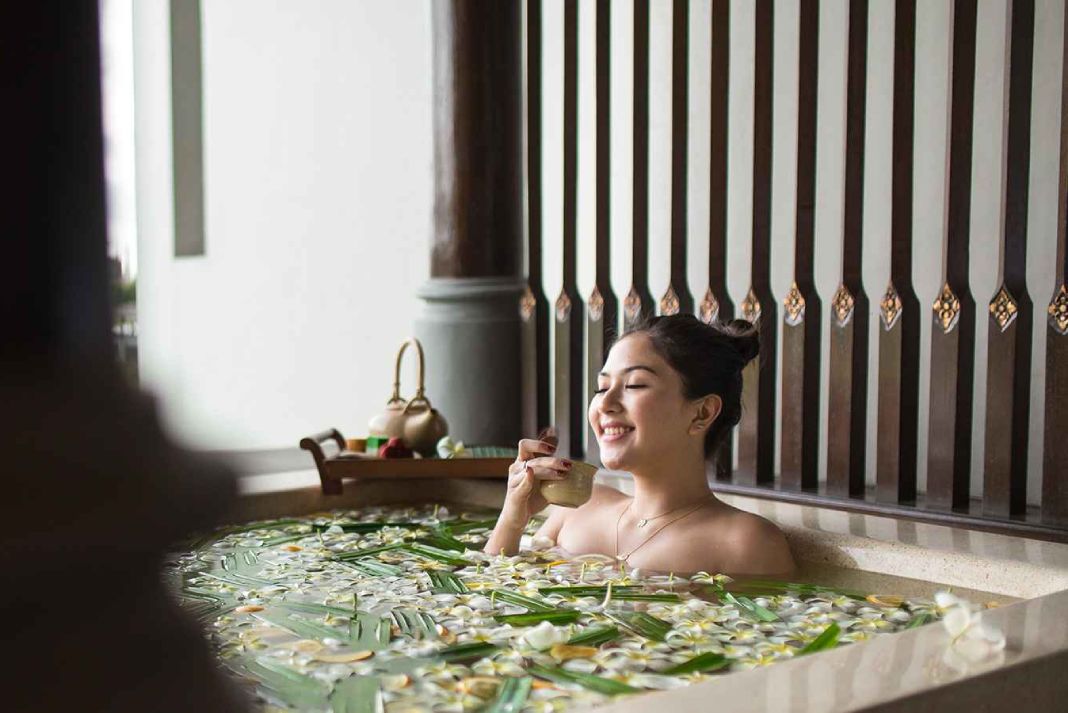
- Boil 2–3 cups water, steep herbs (1/2 cup dried or 1 cup fresh) for 15–20 mins.
- Strain the infusion into a bathtub filled with warm water.
- Add optional extras: 1/2 cup Epsom salt, 5 drops essential oil (if safe).
- Soak for 20 mins in silence, meditation, or with soft music.
- Pat dry gently, avoid harsh soaps post-bath.
- Follow with hydrating herbal oil like calendula or sesame.
💡 Comparison Table: Herbal Baths vs Essential Oil Baths vs Hot Showers
| Feature | Herbal Bath | Essential Oil Bath | Hot Shower |
| Best for | Full-body calm | Quick aroma relief | Hygiene |
| Duration | 20–30 mins | 10–15 mins | 5–10 mins |
| Mechanism | Skin + aroma + warmth | Aroma only | Heat only |
| Risk | Mild skin sensitivity | High allergy risk | Minimal |
| Expert Recommended | ✅ Yes | ✅ Caution | ❌ Not for stress relief |
🔍 Expert Insights
“Herbal baths engage multiple sensory pathways—olfactory, tactile, and thermal—making them highly effective for parasympathetic activation.”
— Dr. Nina Patel, Ayurvedic Practitioner, Kerala Ayurveda Institute
“Lavender and lemon balm are among the most clinically supported herbs for stress reduction when used topically.”
— Dr. A. Santangelo, Naturopathic Physician, NCBI Publication PMID: 31369930
“Magnesium absorption through Epsom salt baths is modest but beneficial in magnesium-deficient individuals.”
— Journal of Integrative Medicine 2020 Study
🧵 FAQs About Herbal Baths for Nerve Health
1. How long do herbal baths take to work?
Effects can begin within minutes. Chronic stress relief may take 1–2 weeks of regular use.
2. Can I combine herbs?
Yes. Blends like lavender + rose + tulsi are gentle and synergistic.
3. Are herbal baths safe during pregnancy?
Avoid herbs like valerian, clary sage, and passionflower. Always consult a doctor.
4. Is it okay to use dried herbs?
Absolutely. Dried herbs often have more concentrated active compounds.
5. How is this different from aromatherapy?
Herbal baths offer both topical and aromatic benefits—a more holistic experience.
6. What temperature should the bath be?
Ideally 37°C–38°C. Avoid hot baths if you have heart conditions or low blood pressure.
⚠️ Disclaimer
This guide is for educational purposes and is not a substitute for professional medical advice. If you have a chronic illness, skin sensitivity, or are pregnant, consult your healthcare provider before trying herbal remedies.
🎉 Conclusion
Herbal bath rituals are a deeply relaxing, sensory-rich therapy for nervous system recovery. Whether you’re struggling with anxiety, overwork, or sleep disturbances, these 20+ natural, science-backed herbal remedies can gently guide your body and mind toward calm. Try rotating herbs weekly, and pair your bath with mindfulness for maximum benefit.