
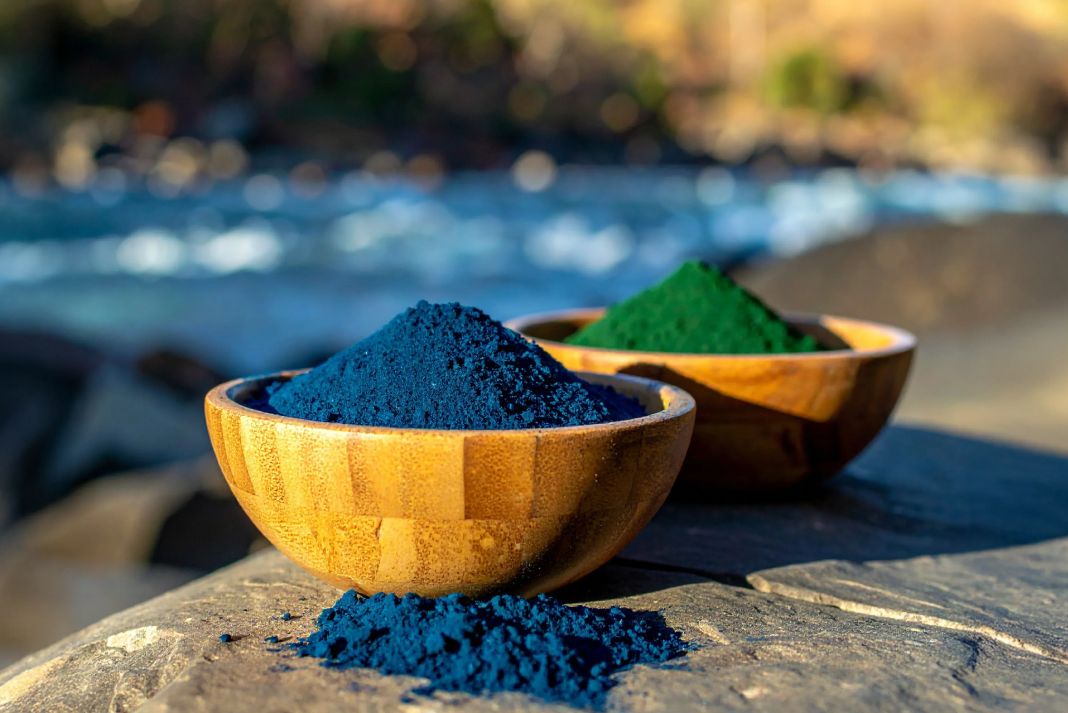
Spirulina has taken the wellness world by storm ✨. But lately, there’s a debate: should you go for Green Spirulina (whole algae) or Blue Spirulina (the phycocyanin extract)? 🤔
Both are powerful, nutrient-dense superfoods — yet they differ in taste, benefits, and even price. This guide breaks down science-backed facts, expert insights, risks, dosage routines, and FAQs so you can choose the right one for your goals ✅.
🔎 What Exactly Are They?
| 🌱 Green Spirulina | 🌊 Blue Spirulina |
|---|---|
| Whole biomass of spirulina (Arthrospira platensis). | Extract of phycocyanin pigment from spirulina. |
| Rich in protein, B-vitamins, iron, minerals, chlorophyll & antioxidants. | Mostly phycocyanin – a concentrated antioxidant & anti-inflammatory compound. |
| Stronger earthy / algae taste. | Mild taste, vibrant blue colour. |
| Cheaper & nutrient-dense. | Expensive & mostly used for antioxidant boost or natural colouring. |
👉 Think of green spirulina as a nutritional powerhouse 🌱, while blue spirulina is a specialized antioxidant shot ⚡.
🧬 Nutrient Showdown
| Nutrient | Green Spirulina 🌱 | Blue Spirulina 🌊 |
|---|---|---|
| Protein 🍗 | ✅ 50–70% of dry weight | ❌ Very low |
| B-Vitamins & Minerals ⚡ | ✅ Rich in B1, B2, iron, calcium | ❌ Minimal |
| Phycocyanin 🔵 | ⚡ Moderate | 🔥 Very High |
| Chlorophyll 🍃 | ✅ Present (detox aid) | ❌ Absent |
| Taste 👅 | Strong, “seaweed-like” | Mild, neutral |
| Cost 💰 | Budget-friendly | Pricier |
🌟 Health Benefits Compared
1️⃣ Antioxidant & Anti-Inflammatory Boost 🛡️
Blue spirulina = concentrated phycocyanin 💙 → fights oxidative stress, reduces inflammation markers.
Green spirulina = broader spectrum (chlorophyll, carotenoids, vitamins) 🌱 → full-body antioxidant support.
👉 Pick Blue if your goal = quick anti-inflammatory action.
👉 Pick Green if your goal = long-term, well-rounded nutrition.
2️⃣ Metabolic Health (Blood Sugar, Cholesterol, Weight) 🩺
Clinical trials show green spirulina lowers LDL, triglycerides, and blood sugar when taken 2–5 g/day ✅.
Blue spirulina has promise for weight control in early studies, but lacks the nutritional depth.
👉 For diabetes, cholesterol, or metabolic support → go Green 🌱.
3️⃣ Brain & Cognitive Health 🧠
Phycocyanin (Blue) protects neurons, reduces oxidative stress, supports memory.
Green spirulina adds B-vitamins, iron, and amino acids needed for brain energy.
👉 Use both together if brain health is your focus.
4️⃣ Immune System & Allergies 🤧
Studies show spirulina reduces symptoms of allergic rhinitis and boosts NK cell activity.
Blue spirulina acts fast for allergies (anti-inflammatory).
Green spirulina supports long-term immune resilience with zinc & iron.
5️⃣ Detox, Liver & Gut Health 🌿
Green spirulina wins here 🍃 → chlorophyll + protein = detox + gut microbiome boost.
Blue spirulina supports antioxidant liver protection but lacks full detox compounds.
🧪 How It Works (Science Mode 🧬)
Phycocyanin (blue) = neutralizes free radicals, lowers inflammatory cytokines (IL-6, TNF-α).
Chlorophyll (green) = binds toxins, supports liver detox.
Protein & Minerals (green) = nourish body + boost gut microbiome.
⚠️ Safety & Side Effects
| Risk 🚨 | Green Spirulina 🌱 | Blue Spirulina 🌊 |
|---|---|---|
| Contamination (microcystins, heavy metals) | Higher risk if poorly sourced ❌ | Safer if purified ✅ |
| Allergic reactions | Slightly higher risk (full biomass) | Lower risk |
| Digestive issues (gas, nausea) | More common | Rare |
| Cost 💰 | Cheaper | Expensive |
👉 Always buy third-party tested brands ✅.
🕒 How to Use Spirulina: A Daily Routine
| Time ⏰ | Green Spirulina 🌱 | Blue Spirulina 🌊 |
|---|---|---|
| Morning 🌞 | 2–3 g in smoothie/oats | 250–500 mg in juice |
| Afternoon 🍵 | — | Optional antioxidant boost |
| Evening 🌙 | Another 1–2 g (optional) | — |
📌 Cycle: Use for 8–12 weeks, then take a 1–2 week break.
👩⚕️ Expert Quotes
“Spirulina supplementation significantly improved glycemic control when added to metformin therapy in type 2 diabetes patients.” — Nutrients Journal, 2024 MDPI Study
“Phycocyanin, the blue pigment in spirulina, has strong antioxidant and anti-inflammatory properties that protect brain and cardiovascular health.” — Healthline Source
“Spirulina reduces allergic rhinitis symptoms, likely through its anti-inflammatory effects.” — NCBI Review PubMed Central
🙋 FAQs
Q1. How long until I see results?
👉 4–8 weeks for inflammation, 8–12 weeks for blood sugar/cholesterol.
Q2. Can blue spirulina replace green spirulina?
👉 No. Blue = antioxidant; Green = full nutrition.
Q3. Is it safe every day?
👉 Yes, in 2–5 g/day (green) or 500 mg–1 g/day (blue). Just ensure product purity.
Q4. Does spirulina help with weight loss?
👉 Indirectly. It may reduce appetite, improve metabolism, and support fat oxidation.
Q5. Who should avoid it?
👉 People with autoimmune diseases, phenylketonuria, or those on immunosuppressants/anticoagulants.
✅ Final Verdict: Which is Better?
🌱 Choose Green Spirulina → If you want full nutrition, detox, metabolic support, and affordability.
🌊 Choose Blue Spirulina → If you want concentrated antioxidant power, better taste, and Instagram-worthy smoothies 💙.
💡 Best Strategy? Use both together for maximum benefits.
📌 Quick Comparison
| Goal 🎯 | Best Choice ✅ |
|---|---|
| Antioxidant boost | Blue Spirulina |
| Nutrient deficiencies | Green Spirulina |
| Metabolic health | Green Spirulina |
| Allergy relief | Blue Spirulina (short-term) |
| Detox & gut health | Green Spirulina |
| Taste & looks | Blue Spirulina |
⚖️ Disclaimer
This article is for educational purposes only 📚. It is not a substitute for professional medical advice. Always consult your doctor before starting spirulina supplements, especially if you have health conditions or take medications.