
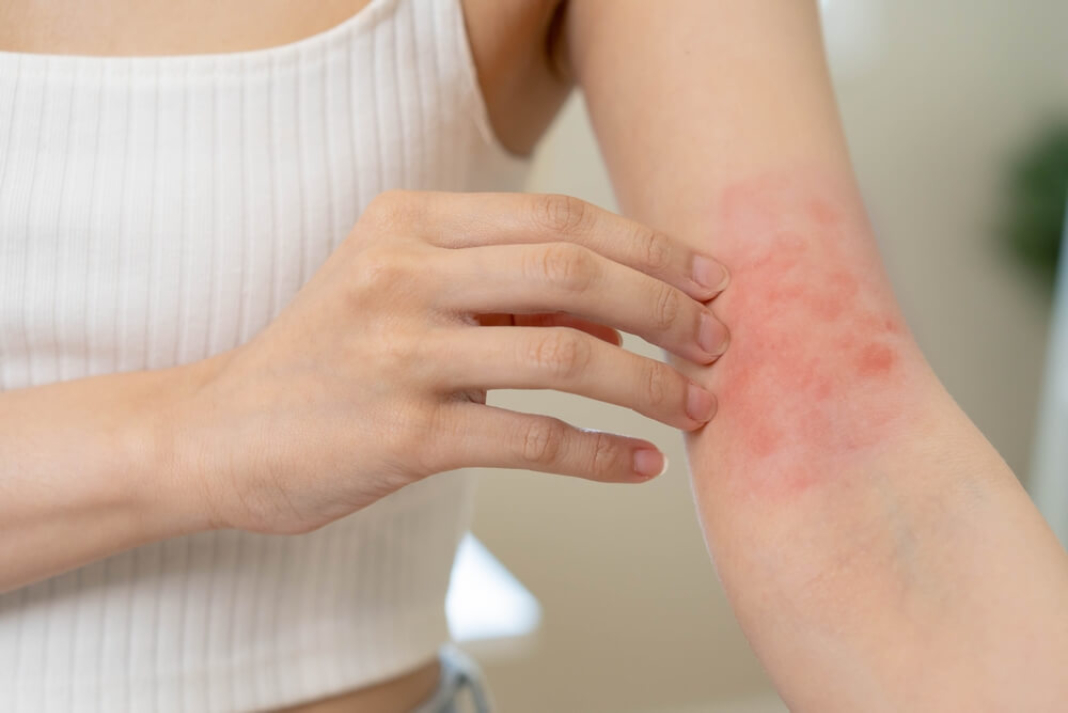
Skin allergies are more than just annoying itches—they can disrupt your daily life, cause inflammation, and signal deeper immune responses. While conventional medications like antihistamines and corticosteroids offer fast relief, many people seek natural remedies that support the skin’s healing without side effects.
🧬 What Causes Skin Allergies?
Skin allergies occur when your immune system overreacts to irritants or allergens, triggering the release of histamine and inflammatory mediators. Common triggers include:
🌿 Pollen
🐶 Pet dander
🧴 Chemical-laden skincare
🦠 Mold
🍤 Food allergens
🐜 Insect bites
🛠️ Mechanism of Natural Remedies
Natural remedies for skin allergies often work by:
✳️ Anti-inflammatory action (reduces redness/swelling)
🌱 Antihistamine-like effect (blocks histamine response)
🛡️ Barrier repair (supports the skin’s protective layer)
🧬 Immunomodulation (regulates overactive immune cells)
🔍 In-Depth Remedies With Step-by-Step Instructions
1. Aloe Vera Gel
🧬 Mechanism: Contains acemannan and glucomannans that reduce inflammation, promote collagen synthesis, and speed skin repair.
✅ Usage:
Extract fresh aloe gel from leaf or use store-bought organic gel.
Apply directly to the affected area.
Leave on for 20 minutes.
Rinse with lukewarm water.
⚠️ Risk: May cause irritation in latex-sensitive individuals. Patch test first.
🔗 Source – PubMed
2. Colloidal Oatmeal Bath
🧬 Mechanism: Avenanthramides suppress inflammatory cytokines and histamine-induced itch.
✅ Usage:
Grind oats into fine powder.
Add 1 cup to a lukewarm bath.
Soak for 15–20 minutes.
Pat dry and moisturize.
⚠️ Risk: None. Safe even for babies.
🔗 Source – NCBI
3. Coconut Oil (Virgin)
🧬 Mechanism: Contains lauric acid, which is anti-inflammatory and antimicrobial. Helps repair the skin barrier.
✅ Usage:
Warm slightly.
Apply a thin layer over rash-prone areas.
Leave overnight.
⚠️ Risk: Can clog pores in acne-prone individuals.
🔗 Source – Dermatitis Journal
4. Apple Cider Vinegar (Diluted)
🧬 Mechanism: Restores acidic pH balance of the skin, inhibits bacterial growth.
✅ Usage:
Mix 1 part ACV with 3 parts water.
Soak a cotton pad and dab on the rash.
Leave for 5–10 minutes, then rinse.
⚠️ Risk: Never use undiluted; may cause burns.
🔗 Source – NCBI
5. Chamomile Tea Compress
🧬 Mechanism: Rich in apigenin, a natural antihistamine with anti-inflammatory effects.
✅ Usage:
Steep chamomile tea and let it cool.
Soak cloth or gauze and place on skin.
Leave for 15–20 minutes.
⚠️ Risk: Avoid if allergic to ragweed or daisies.
🔗 Source – PubMed
6. Witch Hazel
🧬 Mechanism: Tannins in witch hazel reduce skin irritation, inflammation, and help close pores.
✅ Usage:
Apply with cotton pad to the affected area.
Let dry naturally (no need to rinse).
⚠️ Risk: Can cause dryness with overuse.
🔗 Source – J Clin Aesthet Dermatol
7. Turmeric Paste
🧬 Mechanism: Curcumin inhibits inflammatory cytokines like IL-6, TNF-α.
✅ Usage:
Mix 1 tsp turmeric + 1 tsp aloe vera or honey.
Apply to rash for 15 minutes.
Rinse thoroughly.
⚠️ Risk: Can stain skin and clothing.
🔗 Source – Phytother Res
8. Neem Oil
🧬 Mechanism: Contains nimbidin and azadirachtin with antifungal, antibacterial, and anti-inflammatory effects.
✅ Usage:
Dilute neem oil with a carrier oil (1:4 ratio).
Apply directly to irritated skin.
Rinse after 20 minutes.
⚠️ Risk: Potent smell and potential irritation if undiluted.
🔗 Source – J Ethnopharmacol
9. Green Tea Compress
🧬 Mechanism: EGCG (epigallocatechin gallate) reduces inflammation and histamine response.
✅ Usage:
Brew green tea and cool it.
Soak a cloth and apply for 10–15 minutes.
⚠️ Risk: Very mild; generally safe.
🔗 Source – J Invest Dermatol
10. Calendula Salve
🧬 Mechanism: Stimulates epithelial cell regeneration, reduces redness, antimicrobial.
✅ Usage:
Apply calendula ointment to rash 2–3x daily.
No rinsing required.
⚠️ Risk: Rare allergy in sensitive individuals.
🔗 Source – Phytomedicine
11. Licorice Root Extract
🧬 Mechanism: Glycyrrhizin acts like natural cortisone and reduces redness, swelling.
✅ Usage:
Apply licorice-infused cream.
Leave for 15 minutes.
Rinse if using as a DIY mask.
⚠️ Risk: Not for oral use in high doses (can raise BP).
🔗 Source – J Dermatolog Treat
12. Baking Soda Paste
🧬 Mechanism: Neutralizes skin pH and reduces histamine-induced itch.
✅ Usage:
Mix 1 tbsp baking soda + water.
Apply paste to rash.
Leave for 10 minutes, rinse off.
⚠️ Risk: Overuse may cause dryness or irritation.
🔗 Source – Indian J Dermatol
13. Tea Tree Oil (Diluted)
🧬 Mechanism: Antimicrobial, anti-itch; disrupts bacteria/fungi cell walls.
✅ Usage:
Mix 3–5 drops in 1 tbsp carrier oil.
Apply to rash; leave for 15–30 minutes.
Rinse if needed.
⚠️ Risk: Always dilute; may cause burning if used neat.
🔗 Source – Clin Microbiol Rev
14. Evening Primrose Oil
🧬 Mechanism: GLA (gamma-linolenic acid) modulates inflammatory response, improves eczema.
✅ Usage:
Apply a few drops topically OR
Take 1,000 mg/day as supplement.
⚠️ Risk: Mild nausea or stomach upset.
🔗 Source – BMJ Open
15. Manuka Honey
🧬 Mechanism: Methylglyoxal (MGO) is antimicrobial, promotes wound healing and skin barrier repair.
✅ Usage:
Apply a thin layer to affected area.
Cover with clean gauze.
Leave for 20–30 min, rinse off.
⚠️ Risk: Not for diabetic or allergic individuals.
🔗 Source – NCBI
16. Cucumber Juice
🧬 Mechanism: Hydrating, cooling, reduces skin swelling due to its silica and antioxidants.
✅ Usage:
Blend cucumber, strain juice.
Apply with cotton pad or gauze.
Leave for 15 minutes.
⚠️ Risk: None known.
🔗 Source – J Aging Res Clin Pract
17. Cold Compress
🧬 Mechanism: Narrows blood vessels, reduces histamine and itch.
✅ Usage:
Wrap ice pack in cloth.
Apply for 10 minutes at a time.
⚠️ Risk: Don’t apply ice directly to skin.
🔗 Source – Mayo Clinic
18. Epsom Salt Bath
🧬 Mechanism: Magnesium sulfate reduces inflammation and relieves itching.
✅ Usage:
Add 1–2 cups Epsom salt to warm bath.
Soak for 15–20 minutes.
⚠️ Risk: Avoid with broken skin.
🔗 Source – ISRN Dermatol
19. Probiotics
🧬 Mechanism: Improves gut-skin axis, balances immune response, reduces flare-ups.
✅ Usage:
Use Lactobacillus or Bifidobacterium-rich supplements
Dose: 10–20 billion CFU daily
⚠️ Risk: Temporary bloating
🔗 Source – NCBI
20. Flaxseed Oil
🧬 Mechanism: ALA omega-3 reduces inflammation and improves skin hydration.
✅ Usage:
1 tbsp oil daily or apply topically.
Can also be added to smoothies.
⚠️ Risk: May cause diarrhea in high doses.
🔗 Source – J Clin Dermatol
🗣️ Expert Quotes (Cited)
“Chamomile has demonstrated significant anti-inflammatory and anti-allergic properties in dermatological use.”
— Dr. Peter Altmeyer, Dermatologist, Journal of Molecular Medicine
“Colloidal oatmeal is one of the safest, well-tolerated natural treatments for eczema-prone skin.”
— Dr. Zoe Draelos, Clinical Dermatology Researcher, NCBI
“Topical probiotics have shown promise in reducing inflammation and histamine response in allergic skin.”
— Dr. Christina Zielinski, Immunologist, Leibniz Institute for Aging Research
Source
🧘 Structured Daily Routine for Skin Allergy Relief
| 🕒 Time | 💡 Action |
|---|---|
| Morning | Wash with cooled chamomile tea or cucumber juice |
| Midday | Apply aloe vera or calendula salve |
| Evening | Take oatmeal or Epsom bath, then apply coconut/neem oil |
| Before Bed | Drink probiotic smoothie or apply lavender-oil-infused aloe gel |
❗ When to Avoid Natural Remedies
🌡️ If you have open wounds or weeping eczema
❌ History of plant allergies (e.g., ragweed, lavender)
🤒 Signs of infection (pus, fever)
❓ Top 10 FAQs on Natural Remedies for Skin Allergies
1. 🟢 What are the most effective natural remedies for skin allergies?
Some of the most effective remedies include aloe vera, colloidal oatmeal baths, chamomile compresses, and calendula salve. These are supported by scientific studies for their anti-inflammatory and skin-soothing properties.
2. 🟢 How long does it take for home remedies to relieve skin allergies?
Most natural remedies offer relief within a few days, especially for mild to moderate irritation. Chronic conditions like eczema or contact dermatitis may require consistent use for 2–4 weeks to see significant results.
3. 🟢 Are natural treatments as effective as prescription medications?
For mild cases, natural remedies can work very well. However, in severe or infected cases, prescription treatments (like corticosteroids or antihistamines) may be necessary. Natural options work best as complementary therapies.
4. 🟢 Can I combine more than one natural remedy at the same time?
Yes. Many people use layered treatments, such as an oatmeal bath followed by coconut oil or aloe mixed with lavender oil. However, always patch test combinations first to avoid skin sensitivity.
5. 🟢 Are these remedies safe for children or babies with skin allergies?
Only a few remedies are considered baby-safe, including colloidal oatmeal, coconut oil, and calendula. Always consult a pediatrician before trying any remedy on infants or young children.
6. 🟢 Can food allergies cause skin reactions like eczema or rashes?
Absolutely. Foods like dairy, eggs, nuts, and gluten can trigger systemic histamine responses that manifest as eczema, hives, or rashes. In such cases, an elimination diet alongside topical remedies may be helpful.
7. 🟢 What should I avoid during a skin allergy flare-up?
Avoid:
Hot showers 🚿
Harsh soaps or chemicals 🧴
Scratching or rubbing the area 🖐️
Known allergens (e.g., pollen, synthetic fabrics)
8. 🟢 Is it okay to use natural remedies on broken or inflamed skin?
No. Avoid applying anything (even natural) on cracked, oozing, or open wounds unless it’s medically approved (e.g., Manuka honey under supervision). Always consult a dermatologist for broken skin conditions.
9. 🟢 Why is patch testing important before using a home remedy?
Natural doesn’t mean allergy-proof. Herbs, oils, or even oatmeal may cause reactions in some people. Apply a small amount behind your ear or on your forearm for 24 hours to test safety.
10. 🟢 Can natural remedies prevent future allergic breakouts?
Some, like probiotics, flaxseed oil, and evening primrose oil, work from the inside out to regulate the immune system and reduce allergy flare-ups over time, not just symptoms.
✅ Conclusion
Natural remedies for skin allergies offer gentle, effective, and science-backed alternatives—when chosen wisely. Remedies like aloe vera, oatmeal, and chamomile have clinical evidence for soothing inflammation and boosting skin repair. Just remember to patch test, avoid known allergens, and seek professional help when needed.
⚠️ Disclaimer
This guide is for educational purposes only and not a substitute for professional dermatological or medical advice. Always consult a healthcare provider before starting new treatments.