
In today’s fast-paced world, stress, anxiety, and sleep problems are everyday struggles. While medication and therapy are effective, many people are exploring non-invasive, drug-free relaxation methods such as acupressure. Rooted in Traditional Chinese Medicine (TCM), acupressure stimulates specific points (known as acupoints) along meridians to balance the body’s energy (Qi) and promote physical and mental well-being.
Modern research suggests that acupressure can:
Reduce stress and anxiety
Improve sleep quality
Lower blood pressure
Ease muscle tension and fatigue
This guide covers 20 scientifically backed acupressure points for daily relaxation, complete with mechanisms, step-by-step usage, risks, and expert insights.
How Acupressure Works (Scientific Mechanism) 🧠
Acupressure applies physical pressure to points that:
Stimulate the nervous system → triggers endorphin release (natural painkillers).
Enhance parasympathetic activity → slows heart rate, promotes relaxation.
Improve blood circulation → reduces muscle tension and oxygenates tissues.
Balance Qi flow (TCM concept) → aligns mind and body for stress relief.
Research from Harvard Medical School notes that acupressure activates brain regions associated with emotional regulation and pain perception .
20 Daily Acupressure Points for Relaxation 🌸
Here’s the full list with details:
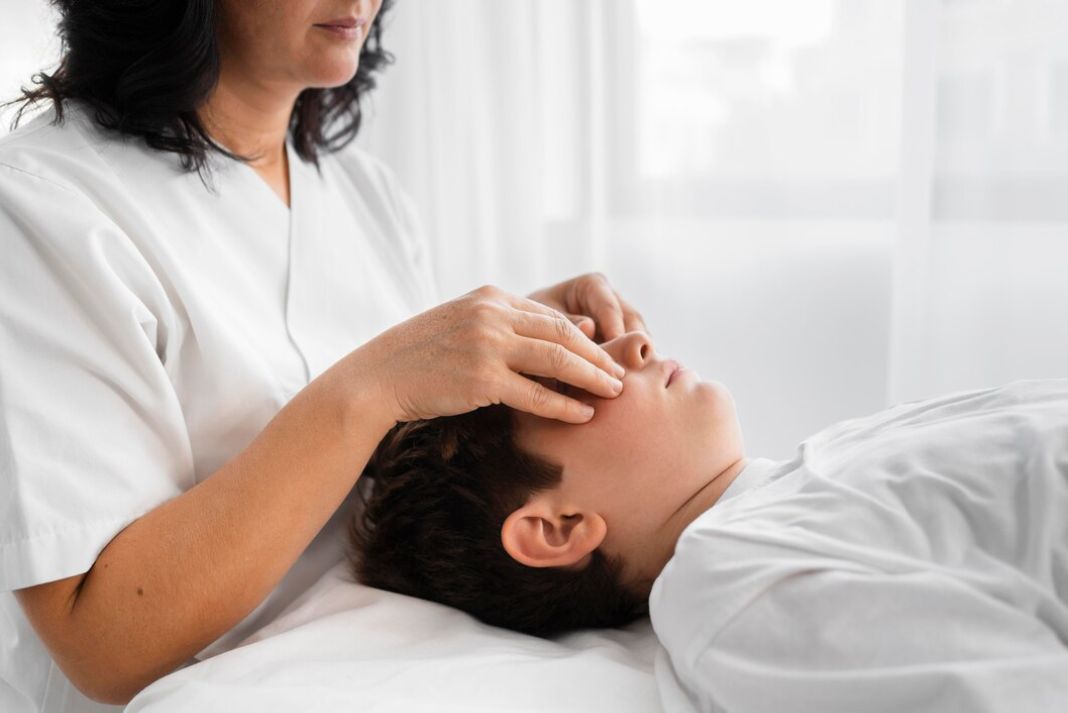
1. Yin Tang (Third Eye Point)
Location: Between the eyebrows.
Mechanism: Calms the mind, regulates hypothalamus activity, reduces anxiety.
How to Use: Press gently with index finger for 1–2 minutes while breathing deeply.
Risks: Mild dizziness if pressed too hard.
2. Hegu (LI4 – Large Intestine 4)
Location: Between thumb and index finger.
Mechanism: Releases tension in head/face, stimulates endorphins.
How to Use: Apply firm pressure for 30–60 seconds per hand.
Risks: Not recommended during pregnancy (may stimulate uterine contractions).
3. Shen Men (HT7 – Spirit Gate)
Location: On the wrist crease, below the pinky finger.
Mechanism: Regulates heart rhythm, improves sleep, reduces anxiety.
How to Use: Massage in circular motion for 2–3 minutes.
Risks: Avoid excessive pressure if you have wrist injuries.
4. Neiguan (P6 – Inner Gate)
Location: Three finger widths below wrist crease, between tendons.
Mechanism: Calms nausea, regulates autonomic nervous system, lowers stress.
How to Use: Apply pressure for 1–2 minutes per wrist.
Risks: Mild tenderness may occur.
5. Tai Chong (LV3 – Liver 3)
Location: On top of foot, between first and second toe bones.
Mechanism: Relieves irritability, improves blood circulation.
How to Use: Apply firm pressure for 2 minutes on each foot.
Risks: Avoid pressing on broken skin.
6. Anmian (Peaceful Sleep Point)
Location: Behind the ear, midway between ear and base of skull.
Mechanism: Improves sleep quality, calms nerves.
How to Use: Massage gently in circular motion for 1–2 minutes before bedtime.
Risks: Avoid if you have ear infections.
7. Bai Hui (GV20 – Hundred Convergences)
Location: Crown of head (draw lines from ears and nose intersection).
Mechanism: Relieves mental fatigue, enhances concentration.
How to Use: Apply light pressure for 2 minutes while sitting.
Risks: May cause dizziness if pressed too hard.
8. Zu San Li (ST36 – Leg Three Miles)
Location: Four finger widths below knee cap, lateral side of shinbone.
Mechanism: Boosts energy, reduces stress, enhances immunity.
How to Use: Press with thumb for 1–2 minutes per leg.
Risks: Avoid pressing if you have knee inflammation.
9. Yongquan (KD1 – Kidney 1)
Location: Sole of the foot, in the depression between second and third toes.
Mechanism: Grounds energy, reduces overthinking, helps sleep.
How to Use: Apply gentle pressure for 1 minute per foot.
Risks: Avoid during severe foot injury.
10. Feng Chi (GB20 – Wind Pool)
Location: At base of skull, in the hollow between neck muscles.
Mechanism: Relieves tension headaches, calms nervous system.
How to Use: Press with thumbs for 1–2 minutes while leaning head back.
Risks: Avoid if you have neck fractures.
11. Pericardium 8 (PC8 – Lao Gong)
Location: Center of the palm, where middle finger touches.
Mechanism: Clears heat, reduces stress, promotes emotional stability.
How to Use: Massage in circular motion for 2 minutes.
Risks: None significant.
12. San Yin Jiao (SP6 – Three Yin Intersection)
Location: Four finger widths above ankle bone on inner leg.
Mechanism: Relieves insomnia, regulates hormones, reduces anxiety.
How to Use: Press with thumb for 1–2 minutes per leg.
Risks: Avoid during pregnancy.
13. Ren 17 (CV17 – Sea of Tranquility)
Location: Center of chest, midway between nipples.
Mechanism: Opens chest, reduces anxiety and palpitations.
How to Use: Apply gentle pressure for 2 minutes.
Risks: Avoid if chest is tender post-surgery.
14. GB21 (Shoulder Well)
Location: Midway between neck and shoulder.
Mechanism: Relieves shoulder tension, promotes relaxation.
How to Use: Press with fingers for 30–60 seconds.
Risks: Avoid during pregnancy (stimulates contractions).
15. Ear Shen Men (Auricular Point)
Location: On upper ear at triangular fossa.
Mechanism: Commonly used in auricular therapy for stress and addiction.
How to Use: Massage with cotton swab for 2 minutes.
Risks: Avoid if ear is infected.
16. Bladder 10 (Tian Zhu – Celestial Pillar)
Location: 1.3 cm lateral to spine at base of skull.
Mechanism: Relieves mental exhaustion and insomnia.
How to Use: Press gently for 1–2 minutes.
Risks: None major.
17. CV12 (Zhongwan – Middle Cavity)
Location: Midway between sternum and navel.
Mechanism: Reduces stress-related stomach upset.
How to Use: Press with fingers for 1 minute.
Risks: Avoid after heavy meals.
18. Bladder 2 (Zan Zhu)
Location: Inner edge of eyebrow.
Mechanism: Relieves eye strain, calms the mind.
How to Use: Press gently for 30 seconds per side.
Risks: Avoid pressing too hard near the eye.
19. GV24.5 (Third Eye – Slightly Above Yintang)
Location: 1 cm above Yintang.
Mechanism: Enhances clarity, calms anxiety.
How to Use: Press lightly for 1–2 minutes.
Risks: None.
20. Sishencong (EX-HN1 – Four Spirit Points)
Location: Around GV20 (one inch in four directions).
Mechanism: Relieves insomnia and stress.
How to Use: Massage gently for 2 minutes.
Risks: Avoid pressing too hard on scalp.
✅ Daily Routine for Relaxation Using Acupressure
Here’s a step-by-step daily plan:
| Time of Day | Acupoints | Duration | Benefit |
|---|---|---|---|
| Morning 🌞 | LI4, ST36, GV20 | 5 min | Boosts energy, clears mind |
| Midday 🕛 | PC8, SP6, GB20 | 5–7 min | Relieves stress, restores focus |
| Evening 🌙 | HT7, Anmian, KD1 | 8–10 min | Prepares body for sleep |
Comparison: Acupressure vs Other Relaxation Methods
| Method | Effectiveness | Risks | Best For |
|---|---|---|---|
| Acupressure | ✅ Non-invasive, stress + sleep benefits | Minor tenderness | Daily self-care |
| Massage | Deep muscle relaxation | Costly, requires therapist | Chronic tension |
| Meditation | Improves focus, anxiety | Requires consistency | Mental calm |
| Yoga | Physical + mental relief | Injury risk if done wrong | Flexibility & stress |
Expert Quotes 🩺
Dr. David Eisenberg (Harvard Medical School):
“Acupressure and acupuncture modulate neurochemical pathways that regulate mood and stress response.”Dr. Michael Spence, Sleep Researcher:
“Stimulation of HT7 and Anmian has shown measurable improvements in insomnia patients within 4 weeks.”World Health Organization (WHO):
“Acupressure can be considered a supportive therapy for stress, tension-type headaches, and insomnia.”
FAQs ❓
1. How long should I press acupressure points daily?
👉 1–3 minutes per point is sufficient.
2. Can acupressure replace medication for anxiety?
👉 No, it’s supportive. Use alongside medical treatment.
3. Are there risks with daily acupressure?
👉 Generally safe, but avoid during pregnancy on points like LI4, SP6, GB21.
4. How soon can I feel results?
👉 Some people feel calm instantly, others see benefits within 2–4 weeks.
5. Can I use acupressure before sleep?
👉 Yes, pressing Anmian, HT7, and KD1 improves sleep quality.
6. Is acupressure scientifically proven?
👉 Clinical studies (PubMed, NCBI) support benefits for anxiety and insomnia.
Disclaimer ⚠️
This article is for educational purposes only. Acupressure should not replace medical care. Consult a licensed healthcare provider for chronic conditions, pregnancy, or if you have concerns.