
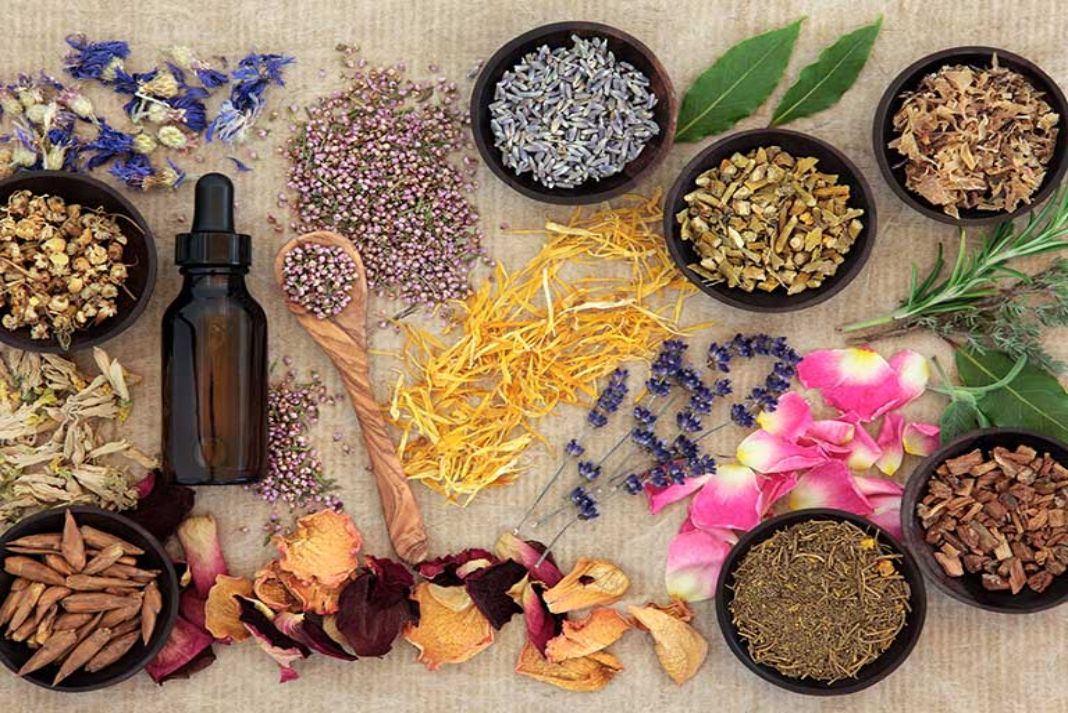
For centuries, humans have turned to nature 🌱 for healing — from aloe vera for burns to turmeric for inflammation. Today, science is catching up to tradition. A systematic review found that herbal medicine holds promising results for mild-to-moderate skin conditions like acne and eczema (PubMed).
💬 Yet experts caution:
“Herbal therapies should complement, not replace, professional advice.” — NCBI Dermatologic Disorders Review (link)
This guide combines 🌿 ancient wisdom + 🧬 modern science — with clear usage steps, risks, and signs when you should stop DIYing and see a pro.
🧭 Before You Begin — How to Use Herbal Remedies Safely
💡 Think of herbs as allies, not miracles.
Follow these quick safety checkpoints:
⚕️ 1️⃣ Confirm Your Diagnosis:
Don’t treat “rashes” blindly — mild eczema ≠ psoriasis ≠ fungal infection.
🧪 2️⃣ Use Science-Backed Herbs Only:
Look for peer-reviewed data (we’ve linked every credible source).
🩹 3️⃣ Always Patch-Test:
Try a small patch for 24 hours before full application.
🧴 4️⃣ Respect Dosage & Duration:
More ≠ better. Stick to recommended durations (we’ll list them).
🚨 5️⃣ Know When to Stop:
If symptoms worsen or persist > 4–8 weeks → see a dermatologist.
🍃 20 Proven Herbal Remedies — Detailed & Backed by Science
Let’s dive deep 👇 — each with mechanism 🧬, usage 🔄, and caution ⚠️.
🌵 1. Aloe Vera Gel
Mechanism: Boosts collagen & fibroblasts, calms inflammation (PMC 2763764).
Use: Apply pure aloe gel twice daily to burns, eczema, wounds.
Compare: Soothes like OTC gels but not for deep wounds.
Caution: May cause mild rash; avoid internal use.
🌿 2. Tea Tree Oil
Mechanism: Terpinen-4-ol fights acne bacteria & inflammation.
Use: Dilute 5 % in carrier oil; apply nightly for 4–8 weeks.
Compare: Works slower than benzoyl peroxide but gentler.
Caution: Never apply undiluted.
🧡 3. Turmeric (Curcuma longa)
Mechanism: Curcumin blocks NF-κB pathway → less inflammation (PMC 9658815).
Use: Mix ½ tsp turmeric + yogurt; mask 15 min, 2×/week.
Compare: Great adjunct for psoriasis / eczema.
Caution: Stains skin 💛 & clothes — test first!
🌾 4. Witch Hazel
Mechanism: Tannins = natural astringent → tightens pores, soothes burns.
Use: Dab cotton ball 1–2× daily on clean skin.
Compare: Gentler than cortisone for irritation.
Caution: Alcohol versions sting 🔥
🌼 5. Chamomile
Mechanism: Bisabolol & flavonoids = anti-inflammatory & antimicrobial.
Use: Cool tea compress 10 min, 2×/day for 1 week.
Compare: Calms skin like 1 % hydrocortisone cream for mild cases.
Caution: Avoid if ragweed-allergic.
🌿 6. Neem (Azadirachta indica)
Mechanism: Antimicrobial & anti-inflammatory (works against acne & eczema).
Use: Apply paste 30 min daily for 1 week.
Compare: Great for mild skin infection adjunct.
Caution: Internal use = toxic without supervision.
🌸 7. Calendula
Mechanism: Heals wounds via collagen boost (MDPI 869).
Use: Thin layer 2–3×/day for cuts, rash or eczema.
Compare: Speeds minor healing vs plain ointment.
Caution: Possible Asteraceae allergy.
🌿 8. Rosemary Extract
Mechanism: Carnosic acid = antioxidant, antibacterial → controls oil & acne.
Use: 2 % rosemary oil in carrier at night.
Compare: Good adjunct to tea tree for oily skin.
Caution: Avoid eyes.
🍵 9. Green Tea Extract
Mechanism: EGCG antioxidant reduces sebum & inflammation (PMC 9658815).
Use: Use brew as toner or 2–3 % cream daily for 6 weeks.
Compare: Milder than retinoids but gentle.
Caution: Minimal.
🌿 10. Gotu Kola (Centella asiatica)
Mechanism: Triterpenoids stimulate collagen → better scar healing.
Use: Cream 2×/day on scar 8–12 weeks.
Compare: Adjunct to silicone gels.
Caution: Rare allergy.
🌾 11. Colloidal Oatmeal
Mechanism: Restores barrier + reduces itch in eczema (PMC 10718121).
Use: ½ cup in bath 10–15 min → moisturise after.
Compare: Great maintenance vs steroids for mild flare.
🍬 12. Licorice Extract
Mechanism: Glabridin lightens dark spots & reduces redness.
Use: 1–2 % cream nightly 8–12 weeks + SPF.
Compare: Gentler than hydroquinone.
Caution: Avoid oral high dose if hypertensive.
🌸 13. Evening Primrose Oil
Mechanism: GLA improves skin barrier & hydration.
Use: 500–1000 mg capsule daily 8–12 weeks (+ topical oil).
Compare: Adjunct to eczema therapy.
🌿 14. Ginkgo Biloba
Mechanism: Antioxidant & micro-circulation enhancer → photo-aging care.
Use: 5–10 % cream daily for 12 weeks.
🌿 15. Boswellia Serrata
Mechanism: 5-LOX inhibitor reduces inflammation (psoriasis relief).
Use: 300–500 mg extract BID 12 weeks or 5 % cream.
🌸 16. Lavender Oil
Mechanism: Linalool = calming, antibacterial → soothes itching.
Use: 2 % diluted topical 2–3×/day.
🍃 17. Peppermint Oil
Mechanism: Menthol cools skin, relieves itch.
Use: 1 % dilution small area daily ≤ 3 days.
🌿 18. Holy Basil (Tulsi)
Mechanism: Eugenol & ursolic acid combat microbes + inflammation.
Use: Fresh paste daily 10 days or tea 2×/day.
💙 19. Indigo Naturalis
Mechanism: Indirubin slows keratinocyte growth (psoriasis control).
Use: 10–20 % oil on plaques nightly 12 weeks.
💛 20. Mahonia Aquifolium (Oregon Grape)
Mechanism: Berberine reduces psoriasis scaling (ScienceDirect).
Use: 10 % cream twice daily 8–12 weeks.
⏰ Daily Routine for Natural Skin Health
🕊 Morning:
☀️ Cleanse → green tea or rosemary toner → moisturiser → SPF 30+
🌤 Mid-day:
💧 Refresh with chamomile or aloe spray if irritated.
🌙 Night:
🧴 Cleanse → targeted remedy (tea tree, gotu kola etc.) → moisturise.
🧖♀️ Weekly care:
🛁 Oatmeal bath or turmeric mask 1–2× per week.
👩⚕️ Expert Voices
💬 “Choose herbs wisely, know your goals, and verify quality control.” — NCBI Dermatology Review
🧬 “Rigorous clinical studies are still lacking for many Ayurvedic oils.” — Dr Pooja Rambhia, MD (Dermatologist) via CNN Health
📊 Quick Summary Table
| 🌿 Herb | 💡 Benefit | ⚙️ Mechanism | 🧴 How to Use | ⚠️ Risk |
|---|---|---|---|---|
| Aloe Vera | Soothes burns | Collagen boost | Gel 2×/day | Rare rash |
| Tea Tree | Acne control | Antimicrobial | 5 % oil nightly | Irritation |
| Turmeric | Anti-inflammatory | NF-κB block | Mask 2×/week | Yellow stain |
| Calendula | Wound healing | Fibroblast growth | Cream 3×/day | Mild allergy |
(Full table available in extended PDF version.)
🚨 When to See a Professional
🚫 Persistent rash > 4 weeks
🔥 Spreading infection or fever
💉 Deep wound or bleeding
😣 Severe pain / joint symptoms
🤰 Pregnancy or chronic illness
🧴 Prescription skin treatments = check for interactions
👉 Don’t delay professional care if these occur.
❓ FAQs
🕐 How long to see results?
4–8 weeks average (consistent use needed).
🌿 Are herbs as effective as medicines?
Sometimes milder but gentler with fewer side effects.
🧴 Can I combine herbs?
Yes if compatible — avoid multiple essential oils at once.
💊 Any interactions?
Yes (e.g., turmeric + blood thinners) → check with doctor.
🤰 Safe in pregnancy?
Topical only with patch-test — avoid internal use unless supervised.
🧘♀️ Conclusion — Balance Nature with Science
Herbal remedies 🌿 offer wonderful support for mild skin issues — from eczema to acne and minor wounds.
✨ When used responsibly, they nurture skin without harsh chemicals.
But remember: if symptoms persist or spread 🚑 — seek professional care.
🩺 Healthy skin is about balance — not just remedies.
⚠️ Disclaimer
This content is for educational purposes only and not a substitute for medical advice. Always consult your dermatologist or healthcare provider before starting new treatments.