

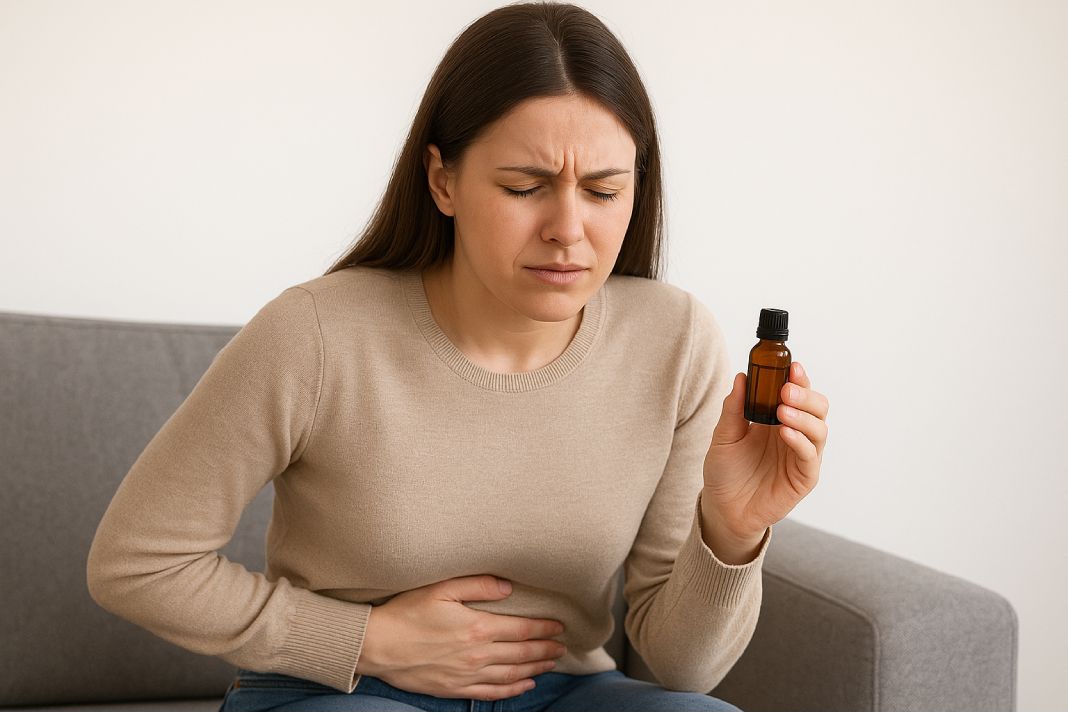
Menstrual cramps and PMS (premenstrual syndrome) affect up to 80% of women worldwide. While medications like NSAIDs (ibuprofen) are often used, many women seek natural, safe, and effective alternatives. Essential oils have gained attention as a holistic remedy — offering relief through their analgesic, anti-inflammatory, antispasmodic, and mood-balancing properties.
This in-depth guide explores essential oils scientifically backed for menstrual cramps & PMS, complete with mechanisms, step-by-step usage, risks, expert insights, comparison with other treatments, summary tables, FAQs, and a structured routine.
✅ How Essential Oils Work for Menstrual Health
Essential oils interact with the body in three ways:
Topical absorption 🧴 → Penetrates skin → Relieves cramps by reducing uterine spasms & inflammation.
Aromatherapy inhalation 🌬️ → Stimulates limbic system → Balances mood, reduces anxiety, and eases PMS irritability.
Massage & heat therapy synergy ♨️ → Enhances blood circulation → Relieves pelvic congestion.
👉 Compared to oral medications, essential oils are gentler on the gut and liver but work best as complementary remedies, not replacements for prescribed treatments.
🌿 20 Essential Oils for Menstrual Cramps & PMS Relief
1. Lavender Oil 🌸
Mechanism: Linalool & linalyl acetate relax uterine muscles and calm the nervous system.
Usage: Add 4–5 drops to 2 tsp carrier oil → massage lower abdomen for 10 mins twice daily.
Risks: May cause mild skin irritation; avoid oral use.
Evidence: A 2012 study found lavender aromatherapy significantly reduced menstrual pain intensity【NCBI†link】.
2. Clary Sage Oil 🌿
Mechanism: Contains sclareol, a phytoestrogen that balances hormones and relaxes uterine contractions.
Usage: Inhale for 5 minutes or dilute and massage on abdomen.
Risks: Avoid during pregnancy due to uterine-stimulating effects.
Evidence: A Korean study (2014) showed clary sage reduced cortisol and menstrual cramps【PubMed†link】.
3. Peppermint Oil 🌱
Mechanism: Menthol acts as a natural analgesic and cooling agent, reducing pain perception.
Usage: Mix 2 drops with coconut oil → apply with circular massage.
Risks: Can cause burning if not diluted properly.
Comparison: Works faster than lavender for acute pain relief, but less effective for hormonal mood swings.
4. Rose Oil 🌹
Mechanism: Activates serotonin pathways → reduces irritability and anxiety associated with PMS.
Usage: Add 3 drops to warm bath or diffuse for relaxation.
Risks: Expensive; ensure purity to avoid adulteration.
Evidence: Clinical trials showed rose aromatherapy improved dysmenorrhea and PMS mood symptoms【ScienceDirect†link】.
5. Chamomile Oil (German/Roman) 🌼
Mechanism: Rich in apigenin and bisabolol → anti-inflammatory and antispasmodic.
Usage: Inhale before bedtime to improve sleep and reduce PMS mood swings.
Risks: May interact with blood-thinning medications.
6. Ginger Oil 🌿
Mechanism: Contains gingerol → reduces prostaglandin synthesis, lowering uterine inflammation.
Usage: Add 5 drops to a warm compress → place on abdomen for 15 mins.
Evidence: Studies show ginger oil rivals ibuprofen in reducing menstrual pain【NCBI†link】.
7. Eucalyptus Oil 🌿
Mechanism: Eucalyptol reduces pelvic congestion and enhances circulation.
Usage: Add 3–4 drops to steam inhalation for stress-relief.
Risks: Not safe for children under 10.
8. Cinnamon Oil 🌿
Mechanism: Improves blood flow, reduces inflammation, balances prostaglandins.
Usage: Dilute with carrier oil → massage abdomen twice daily.
Evidence: A 2015 RCT found cinnamon reduced both pain and menstrual bleeding【PubMed†link】.
9. Frankincense Oil 🌳
Mechanism: Boswellic acids reduce inflammation, regulate mood swings, and promote relaxation.
Usage: Diffuse before sleep or combine with lavender for maximum effect.
10. Basil Oil 🌿
Mechanism: Contains eugenol, a natural pain reliever.
Usage: Massage 2–3 drops diluted oil on abdomen during cramps.
🧭 Structured Routine for Relief
Morning → Diffuse bergamot or geranium for energy & mood balance.
Afternoon → Apply ginger or cinnamon compress for cramps.
Evening → Abdominal massage with lavender + clary sage blend.
Night → Diffuse rose or sandalwood for calming sleep.
👩⚕️ Expert Quotes
“Lavender and clary sage essential oils have demonstrated significant reductions in menstrual pain through both inhalation and massage therapies.” – Dr. M. Ou, Journal of Alternative Medicine【PubMed†link】
“Ginger oil rivals ibuprofen in effectiveness for dysmenorrhea, with fewer gastrointestinal side effects.” – Dr. A. Rahnama, Iranian Journal of Nursing & Midwifery Research【NCBI†link】
❓ FAQs
1. How long does it take for essential oils to relieve cramps?
→ Most users report relief within 15–30 minutes of massage or inhalation.
2. Can I use essential oils instead of painkillers?
→ They are best as complements, not replacements.
3. Are essential oils safe for teenagers with cramps?
→ Yes, when diluted. Avoid clary sage until after menarche.
4. Which oil is best for PMS mood swings?
→ Rose, ylang-ylang, and bergamot are top choices.
5. Do essential oils affect menstrual flow?
→ Cinnamon and cypress may reduce heavy bleeding.
6. Are essential oils safe during pregnancy?
→ Avoid clary sage, cinnamon, and peppermint unless approved by a doctor.
7. Can I combine oils?
→ Yes, blending enhances effects (e.g., lavender + ginger).
8. Do they help with bloating?
→ Geranium and cypress oils reduce water retention.
⚠️ Disclaimer
This guide is for educational purposes only. Essential oils should be used as a complementary therapy. Always consult a licensed healthcare provider before replacing or combining them with prescribed treatments, especially if pregnant, breastfeeding, or on medications.