
🔎 Why Healing Baths Matter
Healing baths offer more than just relaxation—they provide measurable health benefits by enhancing circulation, reducing inflammation, and supporting detoxification. Here’s why they should be part of your wellness routine:
Key Benefits:
- ⚖️ Detoxification: Helps remove toxins, heavy metals, and impurities.
- 💆 Pain Relief: Soothes sore muscles, joints, and inflammation.
- 🧖♀️ Nervous System Support: Promotes relaxation, reducing stress and anxiety.
- ✨ Skin Rejuvenation: Helps with eczema, acne, psoriasis, and dryness.
- 🩹 Lymphatic Drainage & Circulation: Supports overall detox and immune function.
How Healing Baths Work: The Science Behind It
Healing baths work through various physiological processes, including:
- Osmotic Detoxification: Minerals like magnesium sulfate (Epsom salts) draw out toxins and replenish the body.
- Skin pH Modulation: Ingredients like baking soda & apple cider vinegar help balance the skin’s protective barrier.
- Anti-Inflammatory Action: Herbal compounds such as curcumin (turmeric), polyphenols (green tea), and essential oils reduce inflammation.
- Sweat-Induced Detox: Warming baths with ginger or mustard stimulate mild perspiration to mobilize toxins.
🧂 Healing Bath Remedies: Mechanism, Benefits, How to Use & Risks
1. 🧂 Epsom Salt Bath
- Mechanism: Magnesium sulfate relieves pain, reduces inflammation, supports detox.
- How to Use: 2 cups in warm water, soak 20 minutes.
- Benefits: Muscle relaxation, headache relief, skin detox.
- Risks: Avoid in kidney disorders.
- Study
2. 🧼 Baking Soda Bath
- Mechanism: Alkalizes skin, soothes irritation, supports gentle detox.
- How to Use: 1 cup per bath, soak for 20 minutes.
- Benefits: Fungal relief, itch reduction, pH balance.
- Risks: May irritate sensitive skin.
- Study
3. 🍎 Apple Cider Vinegar Bath
- Mechanism: Acidic pH restores skin microbiome, antifungal, antibacterial.
- How to Use: Add 1–2 cups, soak 20–30 mins.
- Benefits: Skin infection relief, body odor reduction.
- Risks: Can sting open cuts.
- Study
4. 🌊 Dead Sea Salt Bath
- Mechanism: Rich in magnesium, potassium; improves circulation and reduces inflammation.
- How to Use: 1–2 cups per bath, soak 20 mins.
- Benefits: Psoriasis relief, muscle recovery.
- Risks: May cause irritation on broken skin.
- Study
5. 🌾 Oatmeal Bath
- Mechanism: Beta-glucans moisturize and reduce inflammation.
- How to Use: 1 cup colloidal oatmeal, soak 20 mins.
- Benefits: Eczema, rashes, dry skin relief.
- Risks: Minimal; test for oat allergy.
- Study
6. 🌶️ Ginger Bath
- Mechanism: Stimulates sweat glands for toxin release.
- How to Use: 2 tbsp grated ginger or ginger tea.
- Benefits: Cold relief, improved circulation.
- Risks: May cause redness, dizziness.
- Study
7. 🧱 Clay Bath (Bentonite)
- Mechanism: Absorbs heavy metals and bacteria.
- How to Use: Mix 1/2 cup clay in water, soak 20 mins.
- Benefits: Detox, acne healing.
- Risks: Can dry skin.
- Study
8. 🌿 Mustard Bath
- Mechanism: Improves circulation, relieves pain.
- How to Use: 1/4 cup mustard powder, soak 20 mins.
- Benefits: Muscle pain, sinus relief.
- Risks: Can irritate sensitive skin.
- Study
9. 💧 Hydrogen Peroxide Bath
- Mechanism: Antimicrobial action on skin.
- How to Use: 1 cup 3% solution in bath.
- Benefits: Wound cleansing, odor control.
- Risks: Avoid mucous membranes.
- Study
10. 🌼 Herbal Bath (Lavender, Chamomile, Calendula)
- Mechanism: Anti-inflammatory, aromatic relaxation.
- How to Use: Add herb sachets or steeped tea.
- Benefits: Stress relief, skin soothing.
- Risks: Allergies possible.
- Study
11. 🧂 Magnesium Flakes Bath
- Mechanism: Higher magnesium absorption than Epsom.
- How to Use: 2 cups flakes, soak 30 mins.
- Benefits: Sleep aid, pain relief.
- Risks: Same as Epsom salts.
- Study
12. 🟡 Turmeric Bath
- Mechanism: Curcumin reduces inflammation, heals wounds.
- How to Use: 3 tbsp turmeric powder in water.
- Benefits: Acne, skin healing, arthritis.
- Risks: Stains skin/tub.
- Study
13. 🍵 Green Tea Bath
- Mechanism: Catechins neutralize oxidative stress.
- How to Use: 5-10 tea bags steeped in bath.
- Benefits: Anti-aging, skin protection.
- Risks: May stain skin.
- Study
14. 🌿 Seaweed Bath
- Mechanism: Iodine & polysaccharides detoxify and nourish.
- How to Use: 1 cup seaweed powder in bath.
- Benefits: Skin toning, hormone support.
- Risks: Iodine sensitivity.
- Study
15. 🌬️ Essential Oils (Eucalyptus, Peppermint)
- Mechanism: Antimicrobial, analgesic, calming.
- How to Use: 5-10 drops diluted in carrier oil.
- Benefits: Mental clarity, pain relief.
- Risks: Never use undiluted.
- Study
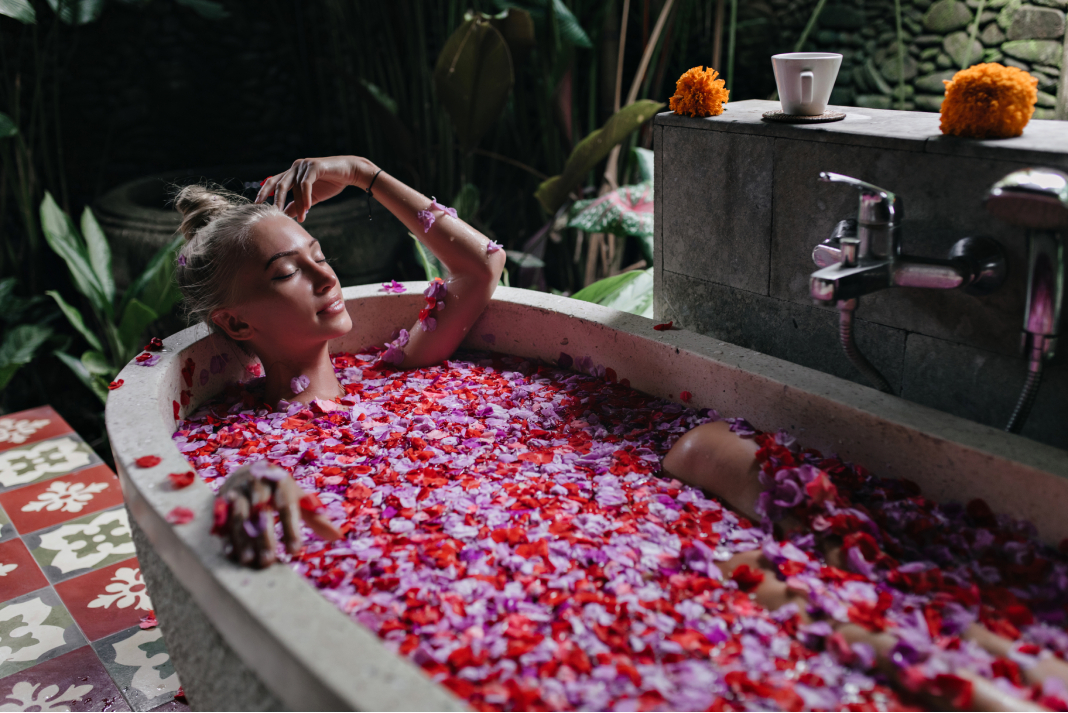
16. 🌹 Rose Petal Bath
- Mechanism: Antioxidants hydrate and soothe.
- How to Use: Add fresh or dried petals.
- Benefits: Romantic relaxation, skin glow.
- Risks: Rare allergies.
- Study
17. 🥛 Milk Bath
- Mechanism: Lactic acid exfoliates dead cells.
- How to Use: 2 cups milk, soak 20 mins.
- Benefits: Smooth skin, brightening.
- Risks: Lactose skin intolerance.
- Study
18. 🍋 Lemon Bath
- Mechanism: Vitamin C neutralizes toxins.
- How to Use: Juice of 2 lemons in water.
- Benefits: Toning, skin lightening.
- Risks: Can sting.
- Study
19. 🍷 Wine Bath
- Mechanism: Polyphenols protect against skin aging.
- How to Use: Add 2 cups red wine.
- Benefits: Anti-aging, luxury spa effect.
- Risks: May irritate.
- Study
20. 🌱 Aloe Vera Bath
- Mechanism: Polysaccharides soothe and heal skin.
- How to Use: Add 1/2 cup gel to bath.
- Benefits: Burns, hydration, eczema.
- Risks: Test for allergies.
- Study
🧠 Expert Quotes Section
“Magnesium therapy via transdermal absorption can significantly reduce muscle pain and inflammation.” – Dr. Norman Shealy, Neurosurgeon Source
“Aloe vera baths can accelerate skin healing and reduce inflammation.” – Dr. Jennifer H. Lee, Harvard Medical School Source
📅 Structured Weekly Bath Detox Routine
| Day | Remedy | Goal |
|---|---|---|
| Monday | Epsom Salt + Lavender | Pain relief & relaxation |
| Tuesday | Baking Soda + Chamomile | Skin detox & calming |
| Wednesday | Apple Cider Vinegar | Antifungal detox |
| Thursday | Seaweed or Turmeric | Skin rejuvenation |
| Friday | Magnesium Flakes | Muscle relief |
| Saturday | Clay + Herbal Mix | Deep toxin cleansing |
| Sunday | Milk or Aloe Vera Bath | Skin nourishment |
❓ Frequently Asked Questions (FAQs)
How many times a week should I take a healing bath?
👉 2–3 times a week is optimal for consistent detox and pain relief without over-drying skin.Can I combine multiple ingredients in one bath?
👉 Yes. Popular combinations include Epsom + Lavender or Oatmeal + Baking Soda. Ensure no skin reactions occur.Are healing baths safe during pregnancy?
👉 Always consult a healthcare provider. Avoid essential oils and very hot water.Do these baths help with lymphatic drainage?
👉 Yes, especially Epsom salt, ginger, and clay baths promote circulation and lymph movement.Should I rinse after the bath?
👉 Recommended, especially with strong ingredients (e.g., turmeric, vinegar, clay) to avoid skin residue or irritation.Do healing baths actually remove toxins from the body?
👉 They support natural detox processes (via sweating, skin pH, magnesium absorption), not a complete systemic cleanse.Can children use these baths?
👉 Mild baths like oatmeal, milk, or herbal baths are usually safe. Avoid harsh ingredients.What’s the difference between Epsom salt and Magnesium flakes?
👉 Magnesium flakes contain magnesium chloride, which absorbs better than magnesium sulfate (Epsom).Are wine baths safe and beneficial?
👉 In moderation, yes. The polyphenols offer anti-aging effects, but not suitable for sensitive skin.Which bath is best for arthritis pain?
👉 Epsom Salt, Dead Sea Salt, and Turmeric baths are most effective based on anti-inflammatory mechanisms.
⚠️ Disclaimer:
This article is for educational purposes only. Please consult a doctor for medical conditions or allergies before trying any bath remedies.