
Feeling anxious, restless, or overwhelmed? You’re not alone. Millions battle stress and anxiety every day. While therapy and medications are important for moderate to severe cases, herbal teas can offer a gentle, natural way to calm your mind and body.
From chamomile’s soothing touch 🌼 to ashwagandha’s stress-shielding power 🌱, these teas may regulate cortisol, balance neurotransmitters, and promote deep relaxation.
This guide brings you scientifically backed herbal teas, how they work, how to use them, risks, expert quotes, and a daily tea routine to maximize benefits.
🧠 Stress & Anxiety: How They Work
Before diving into remedies, let’s decode why stress hits us hard:
⚡ HPA Axis Overdrive → Elevated cortisol = racing thoughts, sleepless nights.
💬 Neurotransmitter Imbalance → Low GABA, serotonin = anxiety symptoms.
🔥 Inflammation & Oxidative Stress → Fuels mood swings and tension.
💓 Autonomic Nervous System Imbalance → Sympathetic (fight/flight) dominates parasympathetic (rest/digest).
👉 Herbal teas calm the nervous system, modulate neurotransmitters like GABA, reduce cortisol, and improve sleep.
🍵 Top Herbal Teas for Stress & Anxiety (With Science ✅)
Here are 20 teas explained with mechanism, evidence, usage, risks, and comparisons.
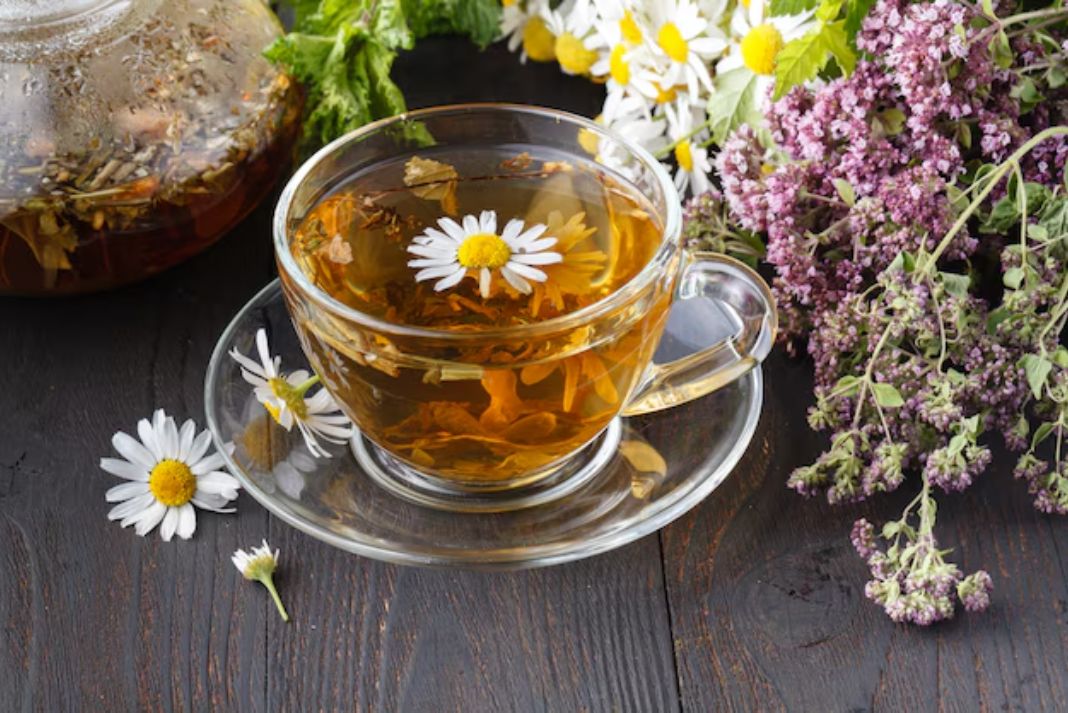
1. 🌼 Chamomile Tea
Mechanism: Apigenin binds to GABA receptors → calming, mild sedative.
Evidence: 9/10 clinical trials show chamomile reduced anxiety (PubMed).
How to Use: Steep 1–2 g dried flowers in hot water (5–10 min), drink 1–3 cups/day.
Risks: Allergies (ragweed family), interacts with blood thinners.
Best For: Bedtime relaxation 😴
2. 🍋 Lemon Balm Tea
Mechanism: Rosmarinic acid boosts GABA, lowers cortisol.
Evidence: RCT showed reduced anxiety & cortisol (BMC).
How to Use: Steep 2–3 g dried leaf in hot water (5–10 min), 1–2 cups/day.
Risks: Mild drowsiness, avoid with sedatives.
Best For: Daytime calm + focus 🧘
3. 💜 Lavender Tea
Mechanism: Linalool & linalyl acetate → GABA modulation + aromatherapy benefits.
Evidence: RCT: elderly drinking lavender tea had lower anxiety & depression (Study).
How to Use: Steep 1–2 tsp dried flowers for 5–10 min.
Risks: Mild GI upset, avoid high doses in pregnancy.
Best For: Evening anxiety + low mood 🌙
4. 🌱 Ashwagandha Tea
Mechanism: Adaptogen; withanolides lower cortisol, balance HPA axis.
Evidence: 240 mg extract daily for 60 days reduced anxiety by 40% (PubMed).
How to Use: Simmer 2–3 g root in water 10–15 min; 1 cup daily.
Risks: Avoid in pregnancy, thyroid issues, autoimmune diseases.
Best For: Chronic stress shield 💪
5. 🌿 Valerian Root Tea
Mechanism: Valerenic acid enhances GABA activity → sedative.
Evidence: Meta-analysis shows improved anxiety & sleep (PMC).
How to Use: Steep 2 g dried root in hot water (10 min), drink at night.
Risks: Daytime drowsiness, avoid mixing with alcohol.
Best For: Insomnia + anxiety combo 🌜
6. 🌸 Passionflower Tea
Mechanism: Flavonoids increase GABA → calming.
Evidence: RCTs show similar effect to oxazepam (mild benzodiazepine) for GAD.
How to Use: Steep 1–2 g leaves/flowers in hot water (10 min), 1–2 cups/day.
Risks: Drowsiness, avoid in pregnancy.
Best For: Pre-exam, pre-presentation nerves 📖🎤
7. 🍵 Green Tea (Low Caffeine)
Mechanism: L-theanine → alpha brain waves, calm alertness.
Evidence: L-theanine reduced stress & improved focus in students (VeryWellHealth).
How to Use: Steep 1 tsp leaves in 80–85°C water (3 min).
Risks: Caffeine sensitivity.
Best For: Stress + productivity boost 🚀
8. 🌿 Holy Basil (Tulsi) Tea
Mechanism: Adaptogen; reduces cortisol, antioxidant.
Evidence: Human trials show reduced stress perception.
How to Use: Steep 2–3 g leaves in hot water (5–10 min), 1–2 cups/day.
Risks: May interact with blood thinners.
Best For: Daytime balance & resilience 🌞
📊 Quick Comparison Table
| Tea 🌿 | Best For | Sedative Level 😴 | Onset Time ⏳ | Risks ⚠️ |
|---|---|---|---|---|
| Chamomile | Sleep, mild anxiety | 🌙 Mild | 1–2 weeks | Ragweed allergy |
| Lemon Balm | Stress, focus | 🙂 Mild | Few days | Drowsy + drug interactions |
| Lavender | Anxiety + low mood | 🌙 Moderate | 1–2 weeks | Pregnancy caution |
| Ashwagandha | Chronic stress | 😌 Low | 4–8 weeks | Thyroid/pregnancy risks |
| Valerian | Sleep + anxiety | 😴 High | 2–4 weeks | Daytime drowsiness |
| Passionflower | Pre-event anxiety | 😌 Moderate | 1 week | Avoid in pregnancy |
| Green Tea | Calm focus | ⚡ Low | Few days | Caffeine jitters |
🗓️ Structured Tea Routine
☀️ Morning → Tulsi + Green Tea → Calm alertness
🌤️ Midday → Lemon Balm → Steady focus
🌆 Evening → Chamomile + Lavender → Relaxation
🌙 Night → Valerian/Passionflower → Deep sleep
👩⚕️ Expert Insights
“Ashwagandha extract significantly reduced anxiety and cortisol in just 60 days.” – Lopresti et al., Medicine (Baltimore), 2019 (PubMed)
“Lemon balm lowered corticosterone and improved GABA, confirming its anti-anxiety action.” – Safari et al., BMC Complement Med Therapies, 2023
“Lavender tea reduced depression and anxiety scores in elderly participants.” – RCT, 2025
❓ FAQs
⏳ How long until I feel results? → 1–2 weeks for mild herbs, 4–8 weeks for adaptogens.
💊 Are they as effective as meds? → No; they’re gentler, best for mild anxiety or as add-on.
⚠️ Can I mix teas? → Yes, but avoid doubling sedatives.
👶 Safe in pregnancy? → Some (chamomile, peppermint) may be safe in moderation, but always ask a doctor.
😴 Which are best for sleep? → Valerian, chamomile, passionflower, lavender.
☕ Best for daytime focus? → Green tea, tulsi, lemon balm.
✅ Conclusion
🌿 Herbal teas are safe, natural allies for stress and anxiety relief.
They:
✔️ Support calm through GABA & cortisol regulation
✔️ Improve sleep quality & mood
✔️ Are inexpensive & easy to use daily
👉 Start with chamomile + lemon balm for gentle calm, or valerian if sleep is the main issue. Use consistently, track your response, and pair with lifestyle changes.
⚠️ Disclaimer
This article is for educational purposes only. Not medical advice. Always consult a healthcare professional before starting herbal remedies, especially if pregnant, breastfeeding, or on medication.