
Your hair is an extension of your health. And just like your body thrives on clean eating, your hair thrives on a natural care routine that nourishes the scalp, strengthens follicles, and reduces damage caused by synthetic products.
In this comprehensive guide, we’ll walk you through how to build a 100% natural, effective, and scientifically-backed hair care routine. Expect powerful remedies, ingredient mechanisms, expert quotes, comparisons with conventional products, FAQs, summary tables, and a complete weekly routine that helps your hair glow naturally.
🟢 Ideal For: All hair types (dry, oily, curly, straight, frizzy, damaged) 🧪 Backed By: PubMed, NCBI, and expert opinions from trichologists and dermatologists
1️⃣ Understanding Your Hair & Scalp
Before building a routine, identify your hair profile:
| Hair Type | Characteristics | Natural Focus |
|---|---|---|
| Dry | Dull, brittle, breaks easily | Hydration & oils |
| Oily | Greasy scalp, limp strands | Clarifying remedies |
| Curly | Prone to frizz, dryness | Deep conditioning |
| Straight | Can appear flat or oily | Lightweight care |
| Damaged | Split ends, breakage | Protein + moisture |
2️⃣ Why Go Natural? (Backed by Science)
🔍 Studies show that long-term use of chemical-based products containing sulfates, parabens, and synthetic fragrances can disrupt the scalp microbiome, cause follicle inflammation, and increase hair fall (NCBI Study).
Natural ingredients:
- Support scalp pH balance 🌿
- Provide antioxidant protection 💪
- Deliver deep nourishment without stripping oils 💧
3️⃣ Top 20 Natural Hair Remedies (Mechanism + Use + Risks)
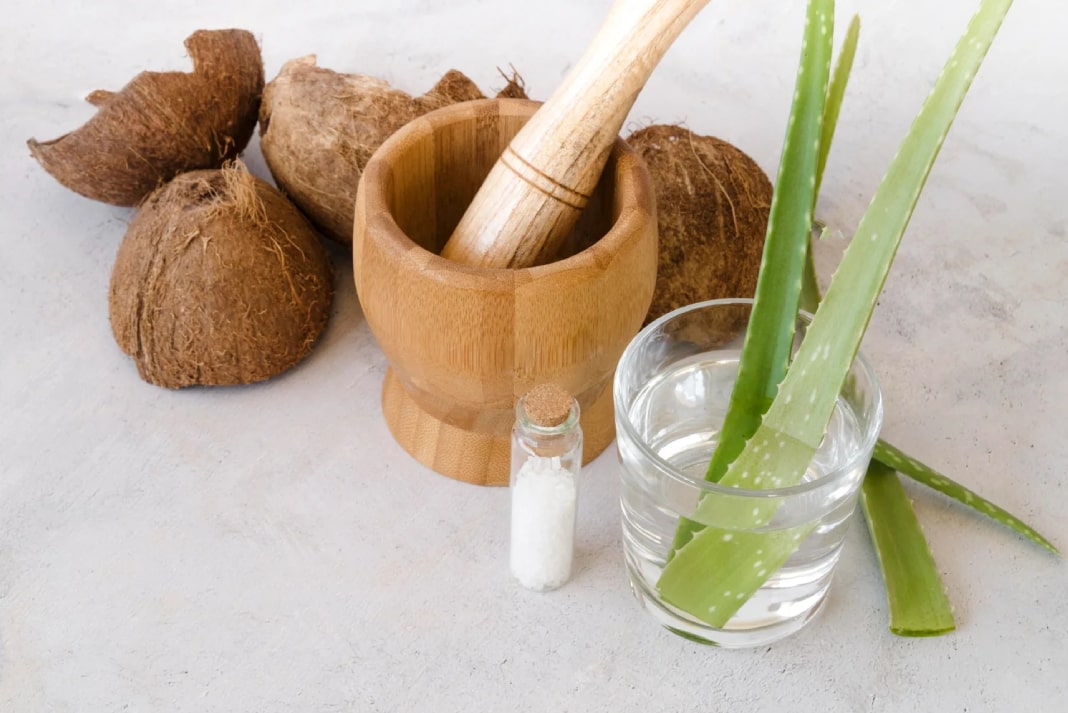
1. 🥥 Coconut Oil
Mechanism: Rich in lauric acid, penetrates hair shaft, reduces protein loss.
Usage: Warm 2 tbsp oil, massage into scalp. Leave overnight. Shampoo next day.
Risk: Avoid if you have very oily scalp—may clog pores.
2. 🌿 Aloe Vera Gel
Mechanism: Contains proteolytic enzymes that repair dead skin cells and support pH balance.
Usage: Apply fresh aloe directly to scalp for 30 mins. Rinse off.
Risk: Patch test for allergy. Can dry out hair if overused.
3. 🍳 Egg Yolk Mask
Mechanism: Packed with biotin and lecithin, helps strengthen hair shaft.
Usage: Mix 1 yolk + 1 tsp olive oil. Apply for 20 mins. Rinse with cold water.
Risk: Smell may linger. Avoid hot water (it cooks egg).
4. 🍋 Lemon Juice Rinse
Mechanism: AHA content exfoliates scalp, reduces dandruff.
Usage: Mix 1 tbsp lemon juice in 1 cup water. Use post-shampoo.
Risk: Can cause dryness. Avoid direct sun exposure.
5. 🌾 Fenugreek Seeds
Mechanism: Mucilage content soothes scalp, protein-rich for strength.
Usage: Soak overnight. Blend into paste. Apply 30 mins, rinse.
Risk: Can be sticky and time-consuming.
6. 🍵 Green Tea Rinse
Mechanism: Catechins improve hair follicle health and reduce DHT.
Usage: Brew 1 cup green tea. Cool. Use as last rinse.
Risk: Mild staining on light hair if left on too long.
7. 🧄 Onion Juice
Mechanism: Increases catalase enzyme, boosts hair regrowth.
Usage: Blend onion. Extract juice. Apply 20 mins. Wash off.
Risk: Strong smell. Use with lemon or rose water.
8. 🌼 Hibiscus Flower Paste
Mechanism: Rich in flavonoids, stimulates hair follicles.
Usage: Blend petals. Apply paste for 30 mins. Rinse with lukewarm water.
Risk: Avoid on light-colored hair; may cause tint.
9. 🧴 Apple Cider Vinegar (ACV)
Mechanism: Balances scalp pH, detangles hair.
Usage: Mix 2 tbsp ACV in 1 cup water. Rinse post-shampoo.
Risk: Never apply undiluted. May sting.
10. 🧪 Rice Water
Mechanism: Inositol protects and strengthens strands.
Usage: Soak rice. Use the water after 24 hrs as final rinse.
Risk: Can cause protein overload if overused.
11. 🍯 Honey
Mechanism: Natural humectant—locks in moisture and soothes the scalp.
Usage: Mix 1 tbsp honey with 2 tbsp water. Apply after shampoo, leave for 15 mins, rinse.
Risk: Can leave residue if not diluted properly.
12. 🍌 Banana Mask
Mechanism: Rich in silica, which strengthens hair and promotes elasticity.
Usage: Mash one ripe banana + 1 tsp honey. Apply 30 mins. Rinse well.
Risk: Use a strainer or blender to avoid chunks.
13. 🥑 Avocado Pulp
Mechanism: Loaded with vitamin E and fatty acids to deeply condition and repair damage.
Usage: Mash half avocado + 1 tbsp olive oil. Leave 20 mins, rinse.
Risk: Can weigh down oily hair types.
14. 🌰 Castor Oil
Mechanism: Contains ricinoleic acid—boosts circulation to scalp and stimulates hair growth.
Usage: Warm slightly. Massage into scalp. Leave 1–2 hours. Shampoo off.
Risk: Very thick—mix with lighter oils for easy removal.
15. 🌾 Oats Rinse
Mechanism: Contains saponins and beta-glucan—gentle cleansing and scalp soothing.
Usage: Boil oats in water. Strain and cool. Use water as rinse.
Risk: Clog risk in pipes—strain thoroughly.
16. 🌿 Neem Paste
Mechanism: Antibacterial and antifungal—treats dandruff, scalp acne.
Usage: Grind fresh neem leaves. Make paste. Apply 30 mins, rinse.
Risk: May be too strong for sensitive scalps—use with aloe.
17. 🌹 Rose Water
Mechanism: Balances scalp pH, controls excess oil, adds natural fragrance.
Usage: Spray on scalp post-wash. Leave in.
Risk: May not hydrate deeply—use as a toner.
18. 🍶 Yogurt Mask
Mechanism: Lactic acid exfoliates scalp; protein nourishes hair.
Usage: Mix 2 tbsp yogurt + 1 tsp honey. Apply 20 mins. Rinse with lukewarm water.
Risk: Strong smell if not rinsed thoroughly.
19. 🌿 Bhringraj Oil
Mechanism: Ayurvedic herb—shown to extend hair growth phase (anagen phase).
Usage: Warm and apply 2–3x/week. Leave overnight. Wash in morning.
Risk: Always patch test—may not suit sensitive skin.
20. 🧂 Sea Salt Scalp Scrub
Mechanism: Exfoliates dead skin, boosts circulation, helps reduce product build-up.
Usage: Mix 1 tbsp sea salt + 2 tbsp coconut oil. Massage gently, rinse thoroughly.
Risk: Avoid on broken skin or scalp wounds.
🗓️ Weekly Natural Hair Care Routine
| Day | AM | PM |
| Monday | Aloe vera + massage | ACV rinse |
| Tuesday | Light coconut oil | Egg mask |
| Wednesday | Herbal shampoo | Fenugreek paste |
| Thursday | Green tea rinse | Onion juice for 20 mins |
| Friday | ACV rinse | Deep condition with banana-honey |
| Saturday | Rice water | No treatment (rest day) |
| Sunday | Full mask (multani + hibiscus) | Steam towel + oiling |
🧠 Expert Quotes Section
“Natural remedies like aloe vera and coconut oil not only protect the scalp barrier but also promote hair density and reduce oxidative stress.”
— Dr. Maryam Zamani, Consultant Dermatologist
Source: British Journal of Dermatology
“Fermented rice water contains inositol, which remains inside hair strands even after rinsing, offering long-term protection.”
— Dr. Satoshi Itou, Japanese Cosmetic Researcher
Source: Int J Cosmet Sci
📊 Summary Table of Top Remedies
| Ingredient | Main Benefit | Frequency | Suitability |
| Coconut Oil | Strengthens, hydrates | 2–3x/week | Dry, damaged |
| Aloe Vera | Repairs scalp | 2x/week | All types |
| Onion Juice | Stimulates growth | 2x/week | Hair fall prone |
| Green Tea | Anti-DHT | 1–2x/week | Oily, dandruff-prone |
| ACV | Balances scalp pH | 2x/week | Oily, dull |
❓ Frequently Asked Questions (FAQs)
1. How long does it take to see results?
🟢 Most users report noticeable changes in 3–6 weeks with consistent use.
2. Can I use multiple remedies in a week?
✅ Yes, rotate based on your hair type and needs. Avoid layering too many at once.
3. Are natural treatments safer than chemical ones?
🧴 Generally, yes—but they can still cause allergies or imbalances if overused.
4. Will onion juice make my hair smell bad?
👃 Yes, mildly. Add lemon or rosewater to mask it.
5. Can I use these on colored or chemically-treated hair?
🟡 Use caution—always patch test, especially ACV or lemon.
6. Is rice water good for frizzy hair?
✔️ Yes. Inositol helps smooth the cuticle.
7. How often should I oil my hair?
🛢️ 2–3 times per week is ideal.
8. Are these remedies suitable for men too?
💪 Absolutely. Scalp biology is similar.
9. Can I store these remedies?
🥶 Fresh is best. Store aloe/rice water max 2–3 days in fridge.
10. Which remedy is best for hair fall?
🌱 Onion juice and green tea (anti-DHT) are most effective.
⚠️ Disclaimer
This guide is for educational purposes. While remedies are backed by scientific literature, always consult a dermatologist if you have scalp conditions, allergies, or hair loss disorders.