
Why cycle tracking for energy works
Your hormones ebb and flow across the cycle and can influence sleep, mood, pain, and perceived effort. Research in athletes finds only trivial average changes in performance, but large person-to-person differences—meaning your records matter more than generic rules. Track, look for your patterns, then align your work, workouts, and recovery accordingly.
Phase-by-Phase Energy Cheat Sheet 🗓️⚡
| Phase | Typical days* | Hormones | Common feel | Energy alignment ideas |
|---|---|---|---|---|
| Menstrual | 1–5 | Estrogen & progesterone low | Cramping, lower energy | Prioritize sleep, low-impact movement, heat therapy, iron-rich meals |
| Follicular (early → late) | 6–13 | Estrogen rising | Clearer mood, rising motivation | Skill work, progressive strength, deep work sessions |
| Ovulation | ~14 | Estrogen peaks, LH surge | Social, sometimes high drive | Short, intense efforts; presentations, networking |
| Luteal (early → late) | 15–28 | Progesterone high → drops pre-menses | PMS, sleep changes, higher RPE | De-load strength/cardio, CBT skills, magnesium/B6 (if appropriate) |
*Cycle length varies; day 1 = first day of bleeding. For physiology and cycle basics, see ACOG. ACOG
First, build your system (apps, paper, or wearable?)
Use at least two signals (e.g., period start + symptoms; or OPK + mucus) for more useful patterns.
If pregnancy prevention is a goal: fertility-awareness methods require training and consistent use, with typical-use failure rates ~12–24% in year 1 (i.e., 12–24 pregnancies per 100), so use condoms or another method if avoiding pregnancy is critical. PubMed
Privacy note: Period apps may not be covered by HIPAA; review data-sharing policies (FTC case against Flo; HHS guidance on health apps). NCBI
The 20 Evidence-Backed Tactics (“Remedies”) for Energy Alignment
For each tactic you’ll see: Mechanism → How to use → Risks/notes.
1) Daily symptom + mood logging 📝🙂
Mechanism: Patterns (sleep, mood, cramps, RPE) across phases let you predict lower-and higher-energy windows.
How: Each evening, rate 0–10 for energy, cramps, sleep quality, and training difficulty; tag the day of cycle. Do this for 2–3 cycles.
Risk/notes: None; just be consistent.
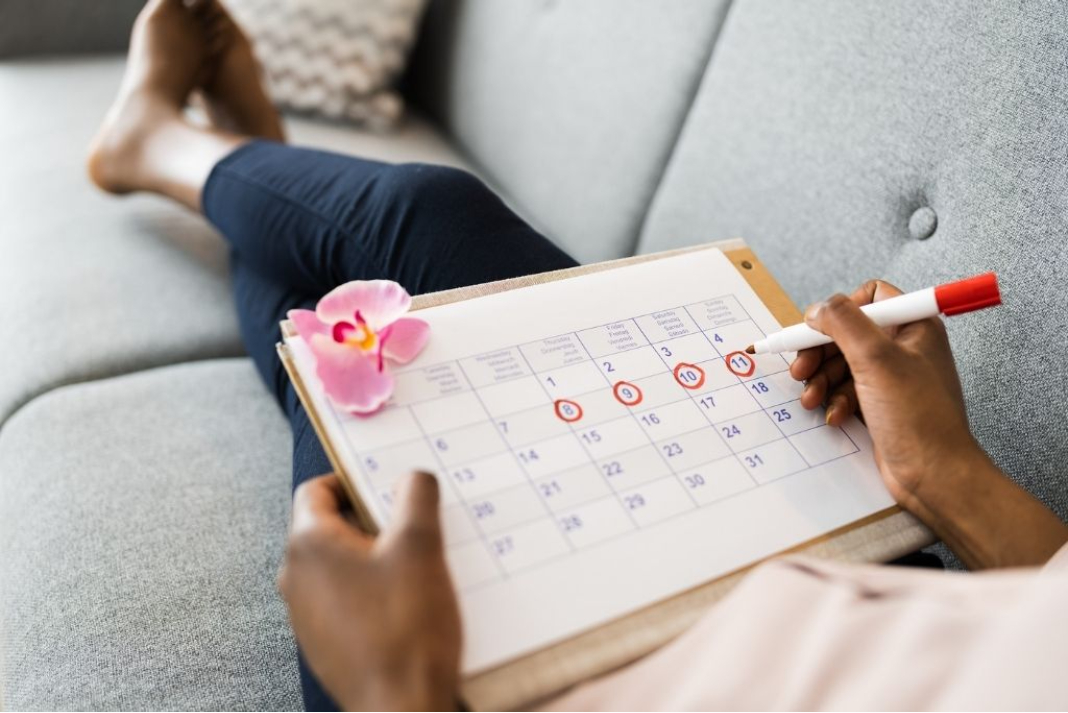
2) Calendar cycle length & variability 📅
Mechanism: Ovulation timing and luteal length shape energy plan.
How: Mark day 1 of each period; calculate cycle length and note mid-cycle signs (see #4–5).
Risk/notes: Irregular cycles merit medical review (thyroid, PCOS, anemia, etc.).
3) Basal Body Temperature (BBT)—with caution 🌡️
Mechanism: Progesterone slightly raises resting temperature after ovulation; it helps confirm that ovulation occurred.
How: Take oral/skin temperature on waking, before moving; look for a sustained rise after mid-cycle.
Risks/notes: BBT is unreliable for precise ovulation timing (~22% accuracy in some studies) and should not be used alone to prevent pregnancy. Use it as a supporting signal, not the lead.
4) Cervical mucus observations 💧
Mechanism: Estrogen makes mucus clear/stretchy before ovulation; progesterone dries it after. These changes correlate with the highest fecundability days.
How: Check sensation/appearance daily; record “dry → creamy → egg-white/stretchy → dry.”
Risks/notes: Learning curve; best when combined with OPKs (#5). Strong evidence that mucus quality predicts fertile days.
5) Ovulation predictor kits (OPKs) 🧪
Mechanism: Detect urinary LH surge that precedes ovulation by ~24–36 h.
How: Test late morning/afternoon starting a few days before expected ovulation; pair with mucus or BBT.
Risks/notes: PCOS can yield false-positive surges; costs add up. Home LH tests show high sensitivity/specificity for LH surges and are widely used. Cochrane Library
6) Resting heart rate (RHR) & heart-rate variability (HRV) 📈
Mechanism: Across the cycle, RHR tends to be higher and HRV lower in the luteal phase, reflecting autonomic shifts that some people feel as higher effort.
How: Use a wearable; tag readings by cycle day; expect your own pattern in ~2–3 cycles.
Risks/notes: Individual variation is large; interpret within your baseline. PMC+1
7) Sleep tracking 😴
Mechanism: Premenstrual/luteal phase is linked with more sleep disturbance in many people, which drags daytime energy.
How: Track sleep efficiency; keep wind-down consistent, dim light, cool room.
Risks/notes: Don’t obsess over “scores”; aim for behaviors. PMC
8) Exercise periodization by your data 🏋️♀️
Mechanism: Best evidence shows trivial average performance dips early follicular (menses), with big individual differences—so personalize.
How: Over 2–3 cycles, place max-effort lifts/intervals where you trend best (often late follicular/around ovulation) and deload if cramps/fatigue spike.
Risks/notes: If training volume is high with low energy + missed periods, screen for RED-S.
9) Aerobic & mind–body exercise for cramps/PMS 🚴♀️🧘♀️
Mechanism: Regular aerobic, strength, yoga/relaxation reduce prostaglandin-related pain and improve PMS scores.
How: 30–45 min, 3–5×/week; keep a light session available in late luteal and day 1–2.
Risks/notes: Start gradually; evidence supports reductions in dysmenorrhea pain after ~8 weeks. Wiley Online LibraryScienceDirect
10) Heat therapy for cramps (simple, powerful) 🔥
Mechanism: Heat increases blood flow and relaxes uterine muscle, easing prostaglandin-driven cramps.
How: Wearable heat wrap or hot water bottle 20–30 min, repeat as needed.
Risks/notes: Avoid burns; ACOG lists heat among effective options.
11) First-line pain relief with NSAIDs (if appropriate) 💊
Mechanism: NSAIDs block prostaglandin synthesis—directly targeting period pain.
How: With clinician guidance, start at first sign of cramps and take with food.
Risks/notes: GI, kidney, and bleeding risks for some; check interactions. ACOG: NSAIDs are first-line for primary dysmenorrhea.
12) Omega-3 fatty acids (add-on option) 🐟
Mechanism: Anti-inflammatory effects may reduce dysmenorrhea pain.
How: Diet (fatty fish) or supplements per clinician advice.
Risks/notes: Meta-analyses show modest pain reduction; quality varies. PubMedWiley Online Library
13) Ginger (Zingiber officinale) 🌿
Mechanism: Inhibits COX pathways and prostaglandins; several RCTs support pain relief similar to NSAIDs in some trials.
How: 750–2000 mg standardized powder daily for days 1–3 (per trials), or as tea—discuss dosing with your clinician.
Risks/notes: Reflux/interaction with anticoagulants possible; evidence supportive but heterogeneous. PMCOxford Academic
14) Magnesium (for PMS mood, sleep, and water retention) 🧲
Mechanism: Co-factor in neurotransmission and smooth muscle regulation; may ease PMS mood and fluid retention in some.
How: Dietary emphasis (nuts, greens, legumes); consider 200–360 mg/day magnesium citrate/glycinate with clinician approval.
Risks/notes: Evidence mixed/older; GI upset possible; adjust for kidney disease.
15) Vitamin B6 (pyridoxine) for PMS mood 🎯
Mechanism: Supports neurotransmitter synthesis; several older reviews suggest benefit for PMS mood symptoms.
How: Food-first; supplements only with clinician guidance, typically ≤100 mg/day short-term.
Risks/notes: High chronic doses can cause neuropathy; evidence quality varies.
16) Cognitive-behavioral therapy (CBT) skills 🧠
Mechanism: Reframes catastrophic thoughts, builds coping & behavioral activation; trials (including internet-based) show improvements in PMS/PMDD symptoms and functioning.
How: 6–10 skills-based sessions or reputable iCBT program; practice daily in late luteal.
Risks/notes: Low risk; access may be a barrier.
17) Sleep & light hygiene (late luteal focus) 🌙
Mechanism: Better sleep buffers mood/pain; circadian stability reduces daytime sleepiness.
How: Fixed bed/wake times; morning outdoor light; limit bright screens 60–90 min pre-bed; 17–19°C bedroom.
Risks/notes: None; evidence links luteal phase to more sleep disturbance—protect this window. PMC
18) Iron strategy during/after menses 🩸
Mechanism: Blood loss can contribute to iron-deficiency fatigue; heavy bleeding raises risk.
How: Iron-rich foods with vitamin C; discuss ferritin testing if fatigue/shortness of breath. WHO provides supplementation guidance for at-risk groups.
Risks/notes: Supplements can cause GI upset; rule out causes of heavy bleeding with a clinician. PubMed
19) Bloat & fluid management 💧🥗
Mechanism: Late-luteal progesterone changes can shift fluid balance; exercise and nutrition habits often help more than restriction.
How: Stay active, emphasize potassium-rich foods (produce/beans), moderate alcohol; experiment with smaller, fiber-rich meals.
Risks/notes: Severe bloating/pain warrants medical evaluation.
20) “When to call the doc” checklist 🩺
Mechanism: Aligning energy works best once medical issues are addressed.
How: Seek care for cycles >45 or <21 days, bleeding >7 days or soaking pads hourly, debilitating pain, fainting, or suspected PMDD.
Risks/notes: For contraception or pregnancy goals, get individualized guidance; fertility-awareness methods have wide typical-use failure rates if used alone. PubMed
Which tracking method is “better”?
OPK + mucus is generally more accurate for identifying the fertile window than calendar or BBT alone; BBT is best for retrospective confirmation. Cochrane Library
Exercise timing “rules” are not universal. Meta-analysis: any performance differences are trivial on average, so personalize based on your logs.
Cramps: NSAIDs are first-line; heat is effective and low-risk; exercise helps over ~8 weeks; ginger/omega-3 can be considered adjuncts. Wiley Online LibraryPMCPubMed
Your 4-Week Energy-Aligned Routine (repeat each cycle)
Menstrual (Days 1–5) 🛟
Care: Heat 20–30 min, gentle mobility/walks, sleep 8 h. Consider NSAIDs per clinician.
Work: Admin, planning, reading.
Food: Iron-rich meals + vitamin C; hydrate.
Follicular (Days 6–13) 🚀
Training: Progress strength; add one high-quality interval day if you feel great.
Work: Deep work sprints, skill acquisition.
Track: Begin OPK if cycles are short/variable; note mucus shift.
Ovulation (~Day 14) 🎤
Training: Short peak sets, technique PR attempts if you’re up for it.
Work: Presentations, brainstorming, networking.
Track: Log symptoms; confirm OPK surge; don’t rely on predictions for contraception. Cochrane Library
Luteal (Days 15–28) 🧘♀️
Training: Maintain volume; swap to moderate intensity; add yoga/relaxation.
Mind: CBT skills for irritability; protect sleep.
Nutrition: Consider magnesium-rich foods; steady complex carbs to stabilize energy. Evidence for magnesium/B6 is mixed—use with clinician guidance.
Expert Insights
“NSAIDs are considered a first-line treatment for dysmenorrhea.” — American College of Obstetricians and Gynecologists (ACOG).
“Exercise performance might be trivially reduced during the early follicular phase … general guidance shouldn’t be made; a personalized approach is recommended.” — McNulty et al., BJSM meta-analysis.
“Cervical mucus secretion on each day correlates highly with the probability of pregnancy if intercourse occurs on that day.” — Najmabadi et al., Human Reproduction.
“BBT is an unreliable technique to determine accurate ovulation timing.” — NCBI Bookshelf, Physiology of Ovulation & BBT.
“Period/fertility apps may not be HIPAA-covered, so review data-sharing policies.” — HHS OCR guidance on health apps. NCBI
Apps, wearables & privacy 🔐
Accuracy: Many consumer apps predict ovulation from past cycles (not ideal). Accuracy improves when they incorporate LH testing and/or mucus rather than calendar math.
Privacy: Read the policy; some apps have shared sensitive data with analytics partners in the past (see FTC vs Flo). Consider local-only or anonymized modes where possible.
Frequently Asked Questions
1) How long until I notice useful energy patterns?
Most people see usable trends in 2–3 cycles if logging daily symptoms + one biological marker (OPK or mucus). Meta-analyses show group averages are trivial; personal data rules.
2) Are “natural” methods as effective as medications for cramps?
For pain relief, NSAIDs remain first-line. Heat and exercise help; ginger and omega-3s may offer adjunct benefits. Choose evidence-based combos with your clinician. Wiley Online LibraryPMCPubMed
3) Can I use cycle tracking as birth control while “energy aligning”?
Fertility-awareness methods can work with perfect use but have 12–24% typical-use pregnancy rates. If avoiding pregnancy is crucial, add condoms or another method. PubMed
4) What if my cycles are irregular or very painful?
See a clinician to check for anemia, thyroid issues, PCOS, endometriosis, or PMDD. Heavy bleeding or severe pain should not be “pushed through.”
5) Are OPKs better than BBT?
Generally yes for predicting ovulation; BBT is best for confirming after. Combining OPKs + mucus is strongest for timing. Cochrane Library
6) Does the menstrual cycle change sleep?
Many experience worse sleep in the late luteal phase; protect sleep hygiene there. PMC
7) Is there proof that working out by cycle boosts gains?
Evidence for strict “cycle syncing” is limited; your response matters most. Use logs to place hard sessions where you feel best.
8) Do magnesium or B6 really help PMS?
Some studies suggest benefit, but quality is mixed. Consider short trials under clinician guidance (watch B6 dose ≤100 mg/day).
9) Are period apps safe for my data?
Policies vary. Review permissions; prefer apps with transparent, minimal data sharing (FTC actions have targeted misleading claims).
10) I’m on hormonal contraception—does this still apply?
Pills/implants/IUDs can flatten hormonal fluctuations, so you may have fewer phase effects. Still track symptoms to align energy to your pattern. (See ACOG for method comparisons.) ScienceDirect
Implementation Checklist ✅
Pick your stack: period start + (OPK or mucus) + daily 0–10 energy & RPE + sleep notes.
Plan weeklies: one hard session in your best window; deload when cramps/sleep dip.
Stock your toolbox: heat wrap, NSAIDs (if appropriate), ginger or omega-3 (adjuncts), CBT skills, iron-rich groceries. PMCPubMed
Review every 4–6 weeks; adjust.
Disclaimer (read me)
This guide is informational and does not replace individualized medical care. For contraception, pregnancy planning, heavy/irregular bleeding, severe pain, or mental-health symptoms, consult a qualified clinician. Supplements and NSAIDs can interact with conditions/medications—use only with professional guidance.