
Bad breath (halitosis) and bleeding gums are more than cosmetic problems — they’re signs of bacterial imbalance and gum inflammation.
While traditional mouthwashes like Chlorhexidine (CHX) work, they can stain teeth and alter taste 👅 over time.
🌱 Herbal mouthwashes, on the other hand:
✅ Reduce plaque & inflammation
✅ Fight bacteria causing bad breath
✅ Support gum healing naturally
✅ Have fewer side-effects
📚 Evidence:
Herbal rinses were as effective as CHX in reducing plaque & gingival inflammation (PMC7201456).
A 2023 RCT found neem + green tea + miswak mouthwash to be comparable to chlorhexidine with better tolerability (PMC10345606).
⚗️ Mechanism: How Herbal Mouthwash Works
🦠 Antimicrobial Action:
Destroys odor-producing bacteria like Streptococcus mutans and Porphyromonas gingivalis.
🔥 Anti-Inflammatory:
Compounds such as curcumin and catechins calm swollen, bleeding gums.
🧬 Antioxidant Power:
Polyphenols neutralize oxidative stress that damages gum tissues.
💧 Biofilm Disruption:
Prevents bacteria from sticking and forming plaque colonies.
🌸 Odor Neutralization:
Essential oils like peppermint & clove mask VSCs (volatile sulfur compounds).
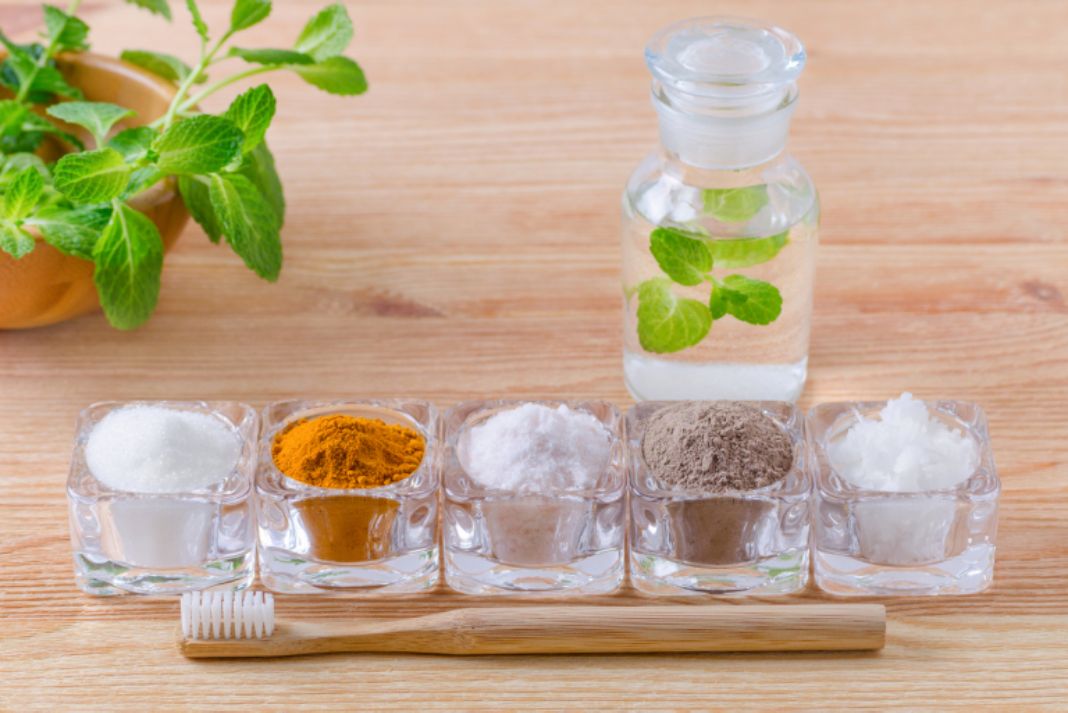
🧪 Base DIY Mouthwash Recipe
🧴 Ingredients (1 cup / 250 ml)
200 ml herbal infusion (see remedies below)
Boiled & cooled or distilled water
½ tsp sea salt 🧂 (optional)
¼ tsp baking soda (for pH balance)
1–2 drops peppermint oil 🌿
🧾 Steps
1️⃣ Boil 200 ml water & add herbs.
2️⃣ Cover and steep 10–15 min.
3️⃣ Strain & cool.
4️⃣ Add salt/baking soda + optional essential oil.
5️⃣ Store in sterilized glass bottle 🧴 (refrigerate up to 10 days).
🕒 Usage:
Swish 15–20 ml for 30–60 seconds, twice daily after brushing & flossing.
Don’t swallow! 🧘♀️
🌿 Top 20 Herbal Remedies for Fresh Breath & Gum Health
Below are the 20 most evidence-backed herbal ingredients for homemade mouthwash — with mechanisms, instructions, and safety tips 👇
1️⃣ 🌳 Neem (Azadirachta indica)
🧠 Antimicrobial & anti-plaque
📖 Studies show neem reduces plaque and bacteria as effectively as chlorhexidine (PMC11914039).
🧴 How: Steep 1 tsp dried neem leaves in 200 ml hot water for 10 min → strain → cool.
⚠️ Caution: Bitter; avoid if allergic.
2️⃣ 🍵 Green Tea (Camellia sinensis)
💚 Rich in catechins (EGCG) — antioxidant, antibacterial, anti-inflammatory.
📖 RCTs show plaque reduction comparable to CHX (AJPCR Journal).
🧴 Steep 1 tsp leaves in 200 ml hot water (5 min). Cool & rinse twice daily.
3️⃣ 🍬 Licorice Root (Glycyrrhiza uralensis)
💨 Reduces odor-causing bacteria and VSCs.
📖 Clinical trial: halitosis decreased significantly in 5 days (PubMed 37635655).
🧴 Infuse 1 tsp dried root in 200 ml water (10 min).
⚠️ Hypertensive? Avoid swallowing.
4️⃣ 🌻 Turmeric (Curcuma longa)
🔥 Curcumin fights inflammation and boosts gum healing.
📖 Shown to lower gingival index and plaque (IJCAP 2024).
🧴 ½ tsp turmeric + 200 ml hot water, steep 10 min.
⚠️ May temporarily stain teeth (harmless).
5️⃣ 🌿 Tulsi (Holy Basil)
🛡️ Natural antibacterial & breath-freshener.
🧴 Steep 6 leaves in 200 ml hot water; cool & rinse.
📖 Proven to reduce S. mutans counts (Science Scholar 2024).
6️⃣ 🌸 Clove (Syzygium aromaticum)
💥 Eugenol = strong antiseptic & pain relief.
🧴 Add 1 drop clove oil to 250 ml base mix or steep ½ tsp ground clove.
⚠️ Avoid if on blood thinners.
7️⃣ 🌱 Peppermint (Mentha piperita)
💨 Antibacterial & odor neutralizer.
🧴 Steep ½ tsp dried leaves for 5 min.
📖 Research shows significant reduction in halitosis with peppermint oil blends (IJCAP 2024).
8️⃣ 🫚 Ginger (Zingiber officinale)
🧠 Anti-inflammatory, biofilm disruptor.
📖 Herbal-vs-CHX studies confirm efficacy (IJDR 2023).
🧴 Steep fresh ginger slice in 200 ml boiling water (10 min).
9️⃣ 🍇 Pomegranate (Punica granatum)
🍒 Polyphenols reduce plaque bacteria & inflammation.
📖 Review confirms antioxidant benefits for gums (MDPI 2025).
🧴 Use 1 tsp rind powder or diluted juice.
🔟 🪵 Miswak (Salvadora persica)
🪥 Traditional “toothbrush tree.”
📖 Proven antimicrobial & anti-plaque (PMC11914039).
🧴 Infuse 1–2 g miswak chips in 200 ml water (10 min).
11️⃣ 🍃 Guava Leaf (Psidium guajava)
💉 Reduces gum bleeding & ulcers.
📖 Flavonoid-rich leaves inhibit S. mutans (ManuscriptScientific 2024).
12️⃣ 🌼 Wintergreen (Gaultheria procumbens)
💊 Contains methyl salicylate = anti-inflammatory.
🧴 Use only 1 drop essential oil per 250 ml rinse.
⚠️ Avoid if aspirin-sensitive.
13️⃣ 🌳 Eucalyptus
💨 Strong antimicrobial & decongestant.
📖 Shown to inhibit oral pathogens (MDPI 2023).
14️⃣ 🍭 Xylitol
🚫 Prevents bacterial adhesion.
🧴 Add ½ tsp xylitol powder to cooled rinse.
📖 Clinical data supports plaque inhibition (AJPCR Journal).
15️⃣ 🌵 Aloe Vera Gel
💧 Soothes gums, promotes healing.
📖 Aloe-based rinses improve gingival scores (IJCAP 2024).
16️⃣ 🌿 Rosemary
🛡️ Antioxidant + antimicrobial synergy.
🧴 Steep 1 tsp leaves in 200 ml water (10 min).
17️⃣ 🌼 Calendula (Marigold)
🌸 Anti-inflammatory & healing for sore gums.
🧴 Use 1 tsp petals; steep 10 min, cool, rinse.
18️⃣ 🍋 Lemon Peel
🍊 Rich in flavonoids; freshens breath.
⚠️ Acidic – rinse with plain water after use.
19️⃣ 🧄 Garlic
🧠 Allicin = potent antimicrobial (use short term).
🧴 Crush 1 clove → steep → strain.
⚠️ Smell strong but works wonders against gum bacteria!
20️⃣ 🌸 Zataria multiflora (Thyme family)
🌿 Potent antimicrobial; used in Iranian herbal rinses (PhytoJournal 2025).
🧭 Comparison: Herbal vs Chemical Mouthwash
| ⚖️ Feature | 🧴 Chlorhexidine (CHX) | 🌿 Herbal Mouthwash |
|---|---|---|
| Plaque Control | ✅ Strong | ✅ Similar (many RCTs show parity) |
| Taste/Staining | ⚠️ Common | 🌿 Minimal |
| Long-Term Safety | ⚠️ Limited | ✅ Safe daily |
| Cost & Access | 💰 High | 💚 Low, DIY-friendly |
🗓️ Suggested Herbal Routine
🕕 Morning: Brush 🪥 → Floss → Tongue scrape → Rinse with Neem or Green Tea mix
🌙 Night: Brush → Rinse with Turmeric or Aloe Vera rinse
🗓️ Weekly Rotation:
Days 1-3 : Neem AM / Green Tea PM
Days 4-5 : Licorice AM / Turmeric PM
Days 6-7 : Tulsi AM / Aloe PM
💬 Tip: After 4–6 weeks, assess gum bleeding, breath freshness, and plaque reduction.
🩺 Expert Insights
💬 “Herbal mouthwashes are a promising alternative and effective in maintaining oral hygiene — especially given the drawbacks of chlorhexidine.”
— Randomized Clinical Trial, PMC10345606
💬 “Herbal rinses show plaque-reducing power comparable to CHX with fewer side-effects.”
— Systematic Review, PMC7201456
💬 “Comparable efficacy with better tolerability — herbal formulations may redefine oral-care standards.”
— 2023 Review, Lippincott Journal
💬 FAQs
🕒 1. How long till I see results?
Most users notice fresher breath in 5 days, gum health in 4–6 weeks.
🌱 2. Are natural rinses as strong as medical ones?
Yes — many RCTs show comparable plaque reduction to chlorhexidine, minus staining.
🚫 3. Can it replace brushing/flossing?
Never! 🪥 Herbal rinses are add-ons, not replacements.
🧴 4. How long does it last?
Store in fridge ≤ 10 days. Discard if cloudy or smells off.
👶 5. Safe for kids or pregnancy?
Yes, most mild herbs are safe — avoid potent oils (clove, wintergreen).
😷 6. Bad breath still persists?
May indicate deeper issues (sinus, GI, diabetes). See your dentist or doctor.
⚠️ Disclaimer
This article is for educational purposes only and does not replace dental advice. Consult your dentist if symptoms persist. Always patch-test new herbs or essential oils.
🌟 Final Takeaway
Herbal mouthwashes blend ancient wisdom with modern science — offering natural, safe, and effective oral care 🌿💧.
👉 Consistency is key: Brush, floss, scrape, and rinse daily.
👉 Rotate herbs for multi-target benefits.
👉 Seek professional advice for chronic gum disease or halitosis.