
🌸 Phytoestrogen-Rich Foods Every Woman Should Eat: A Complete Guide
Hormonal balance is central to women’s health—impacting everything from menstrual cycles and fertility to bone density, skin glow, mood, and metabolism. While hormone therapy is often prescribed, nature offers a gentler ally: phytoestrogens.
These are plant-derived compounds that mimic estrogen’s activity in the body. By binding to estrogen receptors, they can either boost estrogen activity when levels are low (like in menopause) or block stronger estrogen effects when levels are high, acting as natural hormone modulators.
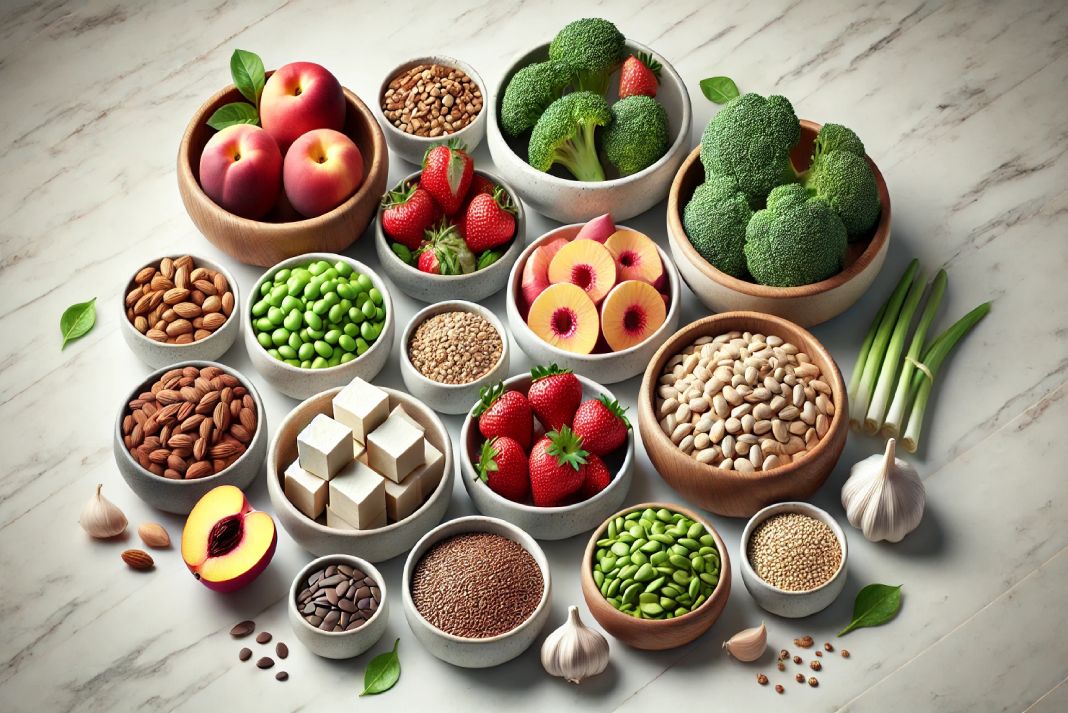
In this guide, we’ll explore 20 scientifically proven phytoestrogen-rich foods every woman should eat for better hormone health.
🌱 What Are Phytoestrogens?
Phytoestrogens are polyphenolic plant compounds that structurally resemble estradiol (the primary female hormone). They mainly fall into three categories:
Isoflavones – abundant in soy, legumes (potent estrogen mimics).
Lignans – found in flaxseeds, sesame seeds, whole grains (converted to enterolignans in the gut).
Coumestans – found in sprouts and leafy greens.
🔬 Mechanism of Action:
Bind to estrogen receptors (ERα and ERβ), exerting weak estrogenic/anti-estrogenic effects.
Regulate estrogen metabolism – balancing hormone activity.
Support gut microbiota – which enhances conversion to active metabolites.
👉 This makes phytoestrogens especially valuable for:
Menopause symptom relief (hot flashes, night sweats).
Bone health & osteoporosis prevention.
Cardiovascular protection.
Skin elasticity & hydration.
Hormonal acne balance.
🌟 20 Best Phytoestrogen-Rich Foods for Women
Below are 20 foods, each explained with mechanism, usage, risks, and tips.
1. Soybeans & Soy Products (Tofu, Tempeh, Edamame)
Phytoestrogen type: Isoflavones (genistein, daidzein).
Mechanism: Strongest estrogen mimics; reduce menopausal hot flashes, support bone density.
Usage: 1–2 servings daily (tofu, soy milk, tempeh).
Risks: High intake may interfere with thyroid in iodine-deficient women.
2. Flaxseeds
Type: Lignans (secoisolariciresinol diglucoside).
Mechanism: Converted by gut bacteria into enterolactone, balancing estrogen.
Usage: 1–2 tbsp ground flax daily in smoothies/oatmeal.
Risks: May cause bloating if introduced suddenly.
3. Sesame Seeds
Type: Lignans (sesamin, sesamolin).
Mechanism: Improve lipid metabolism, reduce menopausal symptoms.
Usage: 1 tbsp sesame seeds or tahini daily.
Risks: High calories—watch portion size.
4. Chickpeas
Type: Isoflavones.
Mechanism: Stabilizes mood, improves estrogen balance.
Usage: Hummus, curries, roasted snacks.
Risks: May cause gas/bloating in sensitive guts.
5. Lentils
Type: Isoflavones + protein.
Mechanism: Plant protein + estrogen support for bone/muscle.
Usage: 1 cup cooked lentils daily.
Risks: None significant if soaked well.
6. Alfalfa Sprouts
Type: Coumestans.
Mechanism: Potent estrogenic activity—support bone & vaginal health.
Usage: Add raw to salads/sandwiches.
Risks: Avoid raw sprouts if immunocompromised (bacterial contamination risk).
7. Red Clover
Type: Isoflavones.
Mechanism: Clinically shown to reduce hot flashes, improve bone markers.
Usage: Herbal tea, capsules.
Risks: Avoid with anticoagulants.
8. Oats
Type: Lignans + beta-glucan fiber.
Mechanism: Regulates estrogen metabolism, lowers cholesterol.
Usage: Overnight oats or porridge daily.
Risks: None significant.
9. Barley
Type: Lignans.
Mechanism: Improves gut microbiome → better phytoestrogen conversion.
Usage: Soups, breads, salads.
Risks: Gluten content (avoid if celiac).
10. Apples 🍎
Type: Lignans + flavonoids.
Mechanism: Mild estrogenic activity + antioxidant for skin.
Usage: 1 apple daily.
Risks: Minimal.
11. Carrots 🥕
Type: Lignans + carotenoids.
Mechanism: Support estrogen detox pathways in the liver.
Usage: Raw or juiced.
Risks: Excess can cause carotenemia (yellow-orange skin).
12. Berries (Strawberries, Raspberries, Blueberries)
Type: Flavonoids + lignans.
Mechanism: Antioxidant-rich, support estrogen receptor modulation.
Usage: 1 cup fresh daily.
Risks: Low.
13. Pomegranates
Type: Ellagitannins → converted to urolithins (estrogenic).
Mechanism: Protect against breast & endometrial cancer risk.
Usage: ½ cup seeds or juice.
Risks: Interacts with statins/antihypertensives.
14. Garlic 🧄
Type: Lignans + allyl sulfides.
Mechanism: Improves estrogen metabolism + cardiovascular health.
Usage: 1–2 raw cloves or cooked daily.
Risks: May thin blood (avoid excess with anticoagulants).
15. Plums & Prunes
Type: Isoflavones + phenolic compounds.
Mechanism: Improve bone mineral density in postmenopausal women.
Usage: 2–3 prunes daily.
Risks: Laxative effect if overconsumed.
16. Green Tea 🍵
Type: Flavonoids (catechins).
Mechanism: Weak phytoestrogen activity + antioxidant.
Usage: 1–2 cups daily.
Risks: May reduce iron absorption.
17. Sunflower Seeds
Type: Lignans + vitamin E.
Mechanism: Hormone modulation + skin health.
Usage: 1 handful daily.
Risks: High calories.
18. Peas
Type: Isoflavones.
Mechanism: Gentle estrogenic effect + protein source.
Usage: Fresh peas or pea protein powders.
Risks: Gas/bloating.
19. Grapes & Red Wine (Moderate) 🍇🍷
Type: Resveratrol + lignans.
Mechanism: Estrogen receptor modulation, anti-aging effects.
Usage: Fresh grapes or 1 glass red wine (occasionally).
Risks: Alcohol risks—prefer grapes over wine.
20. Sweet Potatoes 🍠
Type: Isoflavones + beta-carotene.
Mechanism: Supports progesterone-estrogen balance.
Usage: Roasted, steamed, or mashed.
Risks: High-carb—balance portions.
📊 Summary Table – Top Phytoestrogen Foods
| Food | Phytoestrogen Type | Key Benefit | Best Usage | Risk/Precaution |
|---|---|---|---|---|
| Soy | Isoflavones | Menopause relief, bone health | Tofu, tempeh, milk | Thyroid caution |
| Flaxseed | Lignans | Estrogen balance, gut health | 1–2 tbsp ground | Bloating |
| Sesame | Lignans | Lipid + hormone balance | Tahini, seeds | High calorie |
| Alfalfa Sprouts | Coumestans | Potent estrogenic | Salads, raw | Infection risk raw |
| Red Clover | Isoflavones | Hot flash relief | Tea, capsules | Anticoagulant caution |
| Pomegranate | Ellagitannins | Hormone-related cancer protection | Juice/seeds | Drug interaction |
| Prunes | Isoflavones | Bone strength | 2–3 daily | Laxative |
👩⚕️ Expert Quotes
“Isoflavones from soy can reduce hot flash frequency by up to 50% in menopausal women.” – North American Menopause Society, 2021 【PubMed link】
“Lignans in flaxseed are converted by gut bacteria to enterolactone, which plays a protective role against breast cancer.” – Journal of Nutrition, 2020 【NCBI link】
“Red clover extract shows promise in improving bone mineral density markers in postmenopausal women.” – Phytotherapy Research, 2022 【PubMed link】
❓ FAQs
1. Do phytoestrogen foods really balance hormones?
Yes, they can weakly mimic or block estrogen depending on the body’s needs.
2. How long does it take to see benefits?
Most studies show 8–12 weeks of consistent intake.
3. Are phytoestrogens safe for women with breast cancer?
Moderate intake of whole-food sources is generally safe, but supplements should be avoided unless approved by a doctor.
4. Can phytoestrogen foods replace HRT (Hormone Replacement Therapy)?
They may reduce mild symptoms but are not a complete substitute for medical therapy.
5. Do phytoestrogens help with skin and hair?
Yes—by improving collagen, hydration, and reducing hormonal acne.
6. Is soy bad for thyroid health?
Only in iodine-deficient women; otherwise moderate soy is safe.
7. Can men eat phytoestrogen foods?
Yes, benefits cardiovascular health and prostate health—doesn’t feminize.
⚠️ Disclaimer
This article is for educational purposes only. Phytoestrogens from whole foods are generally safe, but if you have hormone-sensitive conditions (breast, ovarian, or uterine cancer) or are on medication, consult your healthcare provider before major dietary changes.