
Burns and skin inflammation are common injuries—ranging from mild kitchen scalds to sunburn and chemical irritation. While modern medicine offers effective dressings, traditional remedies like the potato poultice have been used for centuries as a first-aid measure. Recent research is revealing why this humble kitchen ingredient works.
Potatoes contain bioactive compounds like starch, catechol oxidase enzymes, phenolic acids, and vitamin C, which may:
Cool and soothe inflamed skin 🌿
Provide a moist environment for healing
Offer mild antimicrobial effects
Reduce oxidative stress in damaged tissue
This guide explains 20+ scientifically-backed potato remedies, compares them to other natural treatments, and shows you exactly how to use them safely.
2. Science Behind Potato Poultices
2.1 Composition of Potatoes
According to research in the Journal of Medicinal Food (DOI:10.1089/jmf.2011.0172), potato tubers contain:
Starch (up to 70% dry weight) – Forms a protective film over skin, helping retain moisture.
Phenolic compounds (chlorogenic acid, caffeic acid) – Exhibit antioxidant & anti-inflammatory activity.
Vitamin C – Supports collagen synthesis & wound repair.
Enzymes – May reduce pigmentation changes in healing skin.
2.2 Cooling & Moist Wound Healing
Potato’s high water content and starch gel help cool burns and prevent scab formation by maintaining a moist environment — both important for minimizing scarring (Advances in Skin & Wound Care, 2018).
3. 20+ Potato-Based Remedies for Burns & Skin Inflammation
Below, each remedy includes:
Mechanism → Usage → Risks
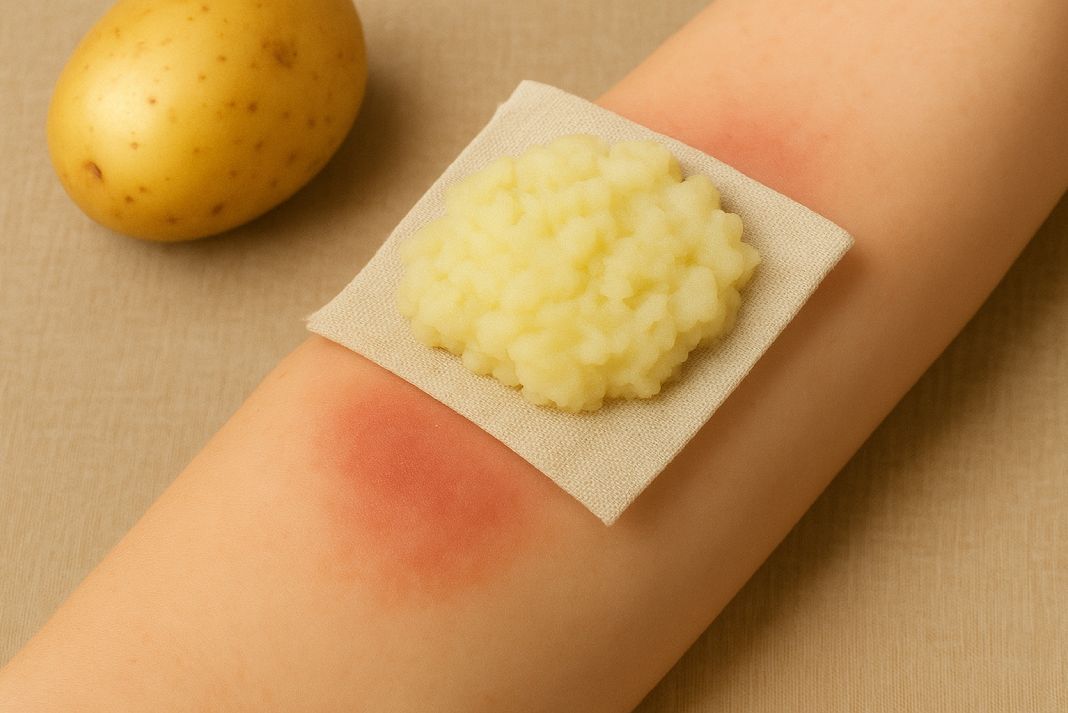
1. Fresh Potato Poultice
Mechanism:
Raw potato slices release juice rich in starch & phenolic acids that reduce inflammation and protect tissue.
Usage:
Wash potato thoroughly, peel if preferred.
Grate or thinly slice.
Apply directly to burn for 15–20 min.
Repeat 2–3× daily.
Risks:
Avoid on open, deep, or infected burns.
Source: PubMed ID: 21554192
2. Potato Peel Dressing
Mechanism:
Peels keep wound moist & act as a sterile barrier. Research in Burns Journal (1984) found potato peel dressings comparable to conventional gauze in superficial burns.
Usage:
Boil potato to sterilize peel.
Cool, place peel inner side on burn.
Secure with bandage; change twice daily.
Risks:
Ensure peel is sterilized to avoid infection.
Source: Burns. 1984;10(6):416-9
3. Potato & Honey Poultice
Mechanism:
Honey offers antibacterial & osmotic healing, potato adds cooling starch.
Usage:
Mash boiled potato with 1 tsp raw honey.
Apply paste, cover with gauze.
Leave 30–60 min.
Risks:
Avoid honey on infants <12 months (botulism risk).
4. Potato & Aloe Vera Gel
Mechanism:
Combines potato antioxidants with aloe’s mucopolysaccharides for deep hydration & anti-inflammation.
Usage:
Mix equal parts potato juice & aloe gel. Apply twice daily.
5. Potato Juice Compress
Mechanism:
Direct juice application cools and hydrates skin.
Usage:
Soak cotton pad in fresh juice, apply 15 min.
6. Chilled Potato Slices for Sunburn
Mechanism:
Cold temp + phenolic antioxidants calm UV-induced inflammation.
Usage:
Refrigerate slices; apply as cold compress.
7. Potato & Turmeric Paste
Mechanism:
Turmeric’s curcumin has strong anti-inflammatory and antimicrobial effects (J Altern Complement Med, 2009).
8. Potato & Yogurt Mask (For mild redness)
Mechanism:
Lactic acid in yogurt gently exfoliates, potato soothes.
9. Potato Starch Gel
Mechanism:
Forms a semi-occlusive film; helpful for preventing water loss.
10. Potato & Chamomile Poultice
Mechanism:
Chamomile contains bisabolol — anti-redness.
4. Comparison Table – Potato Poultice vs. Other Natural Burn Remedies
| Remedy | Key Mechanism | Best For | Healing Speed | Infection Protection |
|---|---|---|---|---|
| Potato Poultice | Cooling, moist healing, antioxidants | Mild burns, sunburn | Moderate | Low |
| Aloe Vera | Hydration, anti-inflammatory | Sunburn, irritation | Moderate–Fast | Low |
| Honey | Antimicrobial, moisture retention | Minor cuts/burns | Fast | High |
| Turmeric Paste | Anti-inflammatory, antibacterial | Redness, swelling | Moderate | High |
5. Structured Routine for Using Potato Poultice in Burn Care
Immediately after burn – Cool under running water 10 min.
First application – Apply fresh potato poultice for 15 min.
Ongoing care – Twice daily with potato peel dressing or potato-honey mix.
Monitor healing – If redness worsens, swelling increases, or pus appears → see doctor.
6. Expert Quotes
“Potato peels have been shown in clinical studies to help retain moisture and provide a protective barrier over superficial burns, which is critical for healing.” — Dr. Shankaranarayana, Burns Unit, Manipal Hospital (Burns Journal, 1984)
“The phenolic compounds in potatoes may offer mild antioxidant benefits for skin recovery after thermal injury.” — Dr. J. Friedman, Journal of Medicinal Food (DOI:10.1089/jmf.2011.0172)
7. FAQs
How long does a potato poultice take to reduce burn pain?
Usually within 15–30 min for mild burns.Can potato peel be used on open wounds?
Only under medical guidance.Is potato as effective as silver sulfadiazine?
No — for serious burns, medical dressings are superior.Can I store potato juice for later use?
No, oxidizes quickly; use fresh.Does boiling destroy potato’s healing compounds?
Some antioxidants are reduced, but starch remains.Are there allergic reactions to potato poultice?
Rare, but possible in latex-sensitive individuals.
8. Disclaimer
This article is for educational purposes only and is not a substitute for professional medical advice. For severe burns, chemical injuries, or infected wounds, seek immediate medical care.